
Special Offers for Kos island.
DESTINATION
KOS
We provide ferry tickets for all the Greek islands. Please do not hesitate to contact us for the most suitable ferry connections for your travel.
FERRY HIGHLIGHTS
DEPARTURE
BODRUM
ARRIVAL
KOS
DEPARTS
EVERYDAY
TICKETS RATES
FROM 25€
DURATION
APPROX 45 MIN

FAQs ABOUT KOS

ISLAND of HIPPOCRATES

Planning a ferry trip from Bodrum to Kos Island? This comprehensive FAQ guide provides answers to all your questions about one of the most popular ferry routes between Turkey and Greece. Whether you need information about ferry schedules, ticket prices, visa requirements, or want to discover Kos's stunning beaches and ancient ruins, you'll find everything you need right here.

From exploring the historic Asklepion to understanding local Greek customs and finding the best tavernas, these frequently asked questions will help you prepare for an unforgettable island getaway to the birthplace of Hippocrates.

Got questions? We've got answers!

Kos Island

Kos is a Greek island located in the southeastern Aegean Sea, part of the Dodecanese island group. It lies just 4 km from the Turkish coast (near Bodrum) and is situated between Rhodes to the south and Kalymnos to the north, making it strategically positioned in the eastern Aegean.

Kos is the third-largest island in the Dodecanese, covering approximately 290 square kilometers (112 square miles) with a coastline of about 112 km. The permanent population is around 33,000 residents, with the majority living in Kos Town. The population significantly increases during the summer tourist season.

Kos is accessible by air through Kos Island International Airport "Hippocrates," with direct flights from Athens and numerous European cities (especially during summer). By sea, ferries connect Kos to Piraeus (Athens), Rhodes, and other Dodecanese islands.

You can also take ferry to Kos from Bodrum in Turkey. The island has excellent ferry connections, making it easily accessible.

BUY YOUR TICKET TO KOS

Kos is world-renowned as the birthplace of Hippocrates, the father of modern medicine. The island is famous for its ancient Asklepion (healing temple), beautiful sandy beaches, the historic Plane Tree of Hippocrates, rich archaeological sites, excellent cycling infrastructure, and vibrant mix of history and beach tourism.

Learn more about the must-see sights and experiences on the island in our guide: Places to Visit in Kos..

Kos enjoys a Mediterranean climate with hot, dry summers and mild winters. Summer temperatures (June-September) average 28-35°C (82-95°F), while winter temperatures range from 12-17°C (54-63°F). The island benefits from cooling meltemi winds in summer and receives minimal rainfall, mostly between November and February.

The ideal period is May to October, with May-June and September-October offering pleasant weather with fewer crowds. July and August are peak season with hot weather and bustling beaches. April and late October are good for exploring archaeological sites with mild temperatures, though some tourist facilities may be closed.

Greek is the official language. Due to heavy tourism, English is very widely spoken in hotels, restaurants, shops, and tourist areas. You'll also encounter German, Italian, and other European languages, as Kos is a popular destination for European tourists.

The Euro (€) is the official currency. ATMs are plentiful throughout the island, especially in Kos Town and resort areas. Credit and debit cards are widely accepted in most establishments, though smaller tavernas and beach bars may prefer cash.

Key destinations include Kos Town (the capital and main port), the mountain village of Zia with panoramic views, Kardamena (resort town), Kefalos with its traditional character, Tigaki and Marmari (beach resorts), Mastihari (fishing village), and the traditional village of Antimachia.

Major attractions include the Asklepion (ancient healing center), the Castle of the Knights (Neratzia Castle), the Ancient Agora, the Plane Tree of Hippocrates, Casa Romana, the archaeological museum, Antimachia Castle, traditional villages like Zia, and numerous archaeological sites throughout the island.

Learn more about the must-see sights and experiences on the island in our guide: Places to Visit in Kos.

Absolutely! Kos is famous for its excellent beaches. Popular options include Paradise Beach, Tigaki Beach (long sandy stretch), Kefalos beaches (including Paradise and Kamari), Agios Stefanos, Mastihari, Lambi Beach, Kardamena Beach, and Marmari. The island offers both organized beaches with facilities and secluded coves.

Kos features diverse landscapes from long sandy beaches and coastal plains to mountainous interior areas. The island is exceptionally flat and green compared to many Greek islands, with fertile plains producing vegetables and fruits. Mount Dikeos rises to 846 meters, offering dramatic views and traditional mountain villages.

Kos has a rich history spanning over 3,000 years. It was home to Hippocrates (460-370 BC) and flourished in ancient times. The island was ruled by Romans, Byzantines, Knights of St. John (who built impressive fortifications), and Ottomans (1522-1912).

It joined Greece in 1948 after Italian occupation and WWII. A devastating earthquake in 1933 led to archaeological discoveries and modern rebuilding.

Transportation options include rental cars, scooters, and ATVs (widely available), an excellent network of flat cycling paths (Kos is known as the "cycling island"), local buses connecting main towns and beaches (KTEL bus service), taxis, and organized tours. Cycling is particularly popular due to the flat terrain.

Local specialties include honey (particularly thyme honey), olive oil, wines from local wineries, ouzo and liqueurs, herbs and spices, natural sponges, ceramics and pottery, traditional textiles, handmade soap and cosmetics, and sweet preserves. Kos Town's market street offers numerous shops with local products.

Kos cuisine features fresh seafood, traditional Greek dishes with local twists, specialties like "pougkia" (stuffed vegetables), "katimeria" (cheese pies), fresh salads with local produce, grilled meats, and excellent yogurt with local honey.

Waterfront tavernas serve fresh fish, while mountain villages offer traditional mezze and homemade dishes.

Kos is a popular tourist destination, especially in July and August when beaches and resorts are busy. However, the island is large enough that you can find quieter areas, particularly in the interior villages, remote beaches, and during shoulder seasons (May-June, September-October). Kos Town can be lively with nightlife.

Kos offers diverse activities including cycling on dedicated paths, windsurfing and kitesurfing (especially at Marmari and Mastihari), hiking in the mountains, boat excursions to nearby islands, scuba diving, visiting archaeological sites, wine tasting tours, jeep safaris, horseback riding, and exploring traditional villages.

Kos has comprehensive tourist infrastructure including hotels ranging from budget to luxury, all-inclusive resorts, numerous restaurants and tavernas, vibrant nightlife (especially in Kos Town and Kardamena), water sports centers, medical facilities, pharmacies, banks, car rental agencies, supermarkets, tourist information centers, and excellent shopping.

You may also visit Kos Island Guide to plan your trip.

Very much so! Kos is excellent for families with its safe, sandy beaches with shallow waters, water parks (Lido Water Park), cycling paths, fascinating historical sites that engage children, family-friendly resorts with kids' clubs, and calm beaches like Tigaki and Mastihari. Many hotels offer family rooms and children's facilities.

The island hosts various events throughout the year including the Hippocratia Festival (summer cultural festival with music, theater, and dance), Wine Festival (summer), Oath Day (end of August, celebrating Hippocrates), Easter celebrations with traditional customs, local panigyria (religious feast days with music and dancing), and concerts at the ancient Odeon.

Visa requirements depend on your nationality. As part of Greece and the Schengen Area, EU citizens need only a valid ID card. Many other nationalities (including US, Canadian, Australian) can visit for up to 90 days within 180 days without a visa. Check current requirements based on your citizenship before traveling.

Bodrum Kos Ferry Departures

The ferry journey from Bodrum to Kos typically takes between 20 to 45 minutes, depending on the type of vessel. Fast catamarans complete the crossing in approximately 20-25 minutes, while conventional ferries may take up to 45 minutes.

From Turgutreis to Kos, it takes 30 minutes with conventional ferry.

The distance between the two ports is approximately 11 nautical miles (around 19-22 kilometers), making this one of the shortest international ferry crossings in the Aegean Sea.

You may also check How to Get to Kos section for detailed information.

BUY YOUR TICKET TO KOS

Ferry schedules vary by season and operator. Typical departure times from Bodrum are at 09:00 AM, 12:30 PM, and 17:00 (5:00 PM). The first ferry usually departs around 08:30-09:00, and the last departure is around 17:00-18:00.

The departure time from Turgutreis to Kos is at 09:15 AM.

During summer season (May-October), there are multiple daily departures every 2-3 hours. In winter months (November-April), services are reduced to 1-2 trips daily. Always verify current schedules before traveling as times can change.

Please also check Bodrum Kos Ferry Departures for detailed information.

BUY YOUR TICKET TO KOS

Ferry ticket price is €25 for a one-way adult ticket. Round-trip tickets range from 38€ to 46€. Prices vary depending on the ferry operator (fast catamaran vs. standard ferry), season, and booking time. Children discount is also available for 0-5 and 6-12 ages.

Please check Bodrum Kos Ferry Tickets and Turgutreis Kos Ferry Tickets for ticket rates.

BUY YOUR TICKET TO KOS

The Bodrum-Kos ferry operators are Dentur and Yesil Marmaris Lines. Each company offers different schedules, vessel types, and service levels. Some operators provide fast catamarans while others use conventional ferries.

Turgutreis Bodrum ferry operator is Dentur operating conventional ferry service. All companies are regulated and meet international maritime safety standards.

Visa requirements depend on your nationality. Turkish citizens with ordinary (red) passports require a valid Schengen visa to enter Greece. However, a special "Visa on Arrival" program is sometimes available during summer season for short tourist visits to Greek islands including Kos.

EU citizens can travel with just a valid ID card or passport. Non-EU citizens should check Schengen visa requirements for their nationality. Turkish citizens with TRNC (Northern Cyprus) passport stamps may be denied entry to Greece.

The ferry service operates year-round, with peak season from May to October when multiple daily sailings are available. Summer months (June-September) offer the most frequent service with the highest number of departures.

Winter season (November-April) sees reduced frequency with only 1-2 sailings per day, and services may occasionally be canceled due to adverse weather conditions. Late spring to early autumn offers the best combination of good weather and calm seas.

BUY YOUR TICKET TO KOS

No, currently ferries operating between Bodrum or Turgutreis and Kos do not allow vehicle transportation. The route is exclusively for foot passengers. All vessels are passenger-only ferries designed for short international crossings.

However, this isn't a disadvantage as car rental services are readily available on Kos island at reasonable rates, allowing you to explore the island comfortably.

It's strongly recommended to arrive at least 60 minutes (1 hour) before your scheduled departure time. This allows sufficient time for ticket collection (if needed), passport control, customs procedures, and boarding.

During peak summer season, the port gets very busy and passport control lines can be long, so arriving early is essential to avoid missing your ferry. Some operators suggest arriving 45-60 minutes early.

Yes, you can easily buy ferry ticket online through our website.

BUY YOUR TICKET TO KOS

All passengers must carry a valid passport (valid for at least 6 months beyond travel date) for this international crossing. EU/Greek citizens may use their national ID card instead. Non-EU citizens need a passport and may require a Schengen visa depending on travel direction and nationality.

You'll also need your ferry ticket confirmation (printed or digital). Turkish citizens whose passports contain entry and exit stamps for the Turkish Republic of Northern Cyprus (TRNC) are not permitted to enter Greece by the Greek authorities.

Yes, ferry operators allow pets on board. You'll need to carry necessary pet documentation, including a pet passport with required vaccinations. If traveling with a pet, you must inform the ferry company in advance, carry all necessary documentation, and take full responsibility for your pet.

Ferries offer basic but comfortable amenities suitable for the short journey. You'll find air-conditioned seating areas or lounges, open decks for enjoying sea views and fresh air, and snack bars on most vessels serving light refreshments, drinks, and beverages.

Due to the brief crossing time (20-45 minutes), cabins are not available on these ferries. Onboard seating is included in your ticket price, and restroom facilities are available.

Absolutely! Day trips are extremely popular and highly convenient. The typical schedule allows you to depart Bodrum or Turgutreis in the morning (around 09:00), spend 6-9 hours exploring Kos, and return in the evening (around 18:00).

This gives you plenty of time to visit major attractions like the Asklepion, Tree of Hippocrates, Neratzia Castle, beautiful beaches, and enjoy authentic Greek cuisine at local tavernas.

While planning your trip to Kos, you may find our Kos Island Guide section very helpful for planning your day

BUY YOUR TICKET TO KOS

Ferries to Kos depart from the Bodrum Cruise Port and Bodrum Castle Harbor. Additionally, there are departures from Turgutreis, a town located about 20 km southwest of Bodrum.

On Kos Island, ferries arrive at the Kos Town port, which is centrally located and well-connected to the rest of the island.

Yes, there is a 1-hour time difference. Greece (Kos) is 1 hour behind Turkey (Bodrum). When it's 10:00 in Bodrum, it's 09:00 in Kos. Remember to adjust your watch when crossing the border to avoid confusion with ferry return times and planning your activities on the island. All ferry schedules are published in local time for each port.

Ferry companies are generally flexible with luggage allowances. Most operators allow 1-2 pieces of luggage per person, with weight limits typically between 25-50 kg per person.

You can keep luggage beside you or store it in designated areas. There's no formal check-in for luggage. Excess or oversized luggage may incur additional fees.

Yes, it's possible to buy tickets at the port on the day of travel, but this is not recommended, especially during peak summer season. Ferries can sell out quickly, and advance booking online ensures you secure your spot.

BUY YOUR TICKET TO KOS

The best time depends on your preferences. Peak summer (July-August) offers the most frequent service, warmest weather (temperatures reaching 35°C), and vibrant atmosphere, but expect crowds and higher prices.

Shoulder season (May-June, September-October) provides pleasant weather, calm seas, fewer tourists, and better value. Spring (April-May) offers mild temperatures and blooming landscapes. Winter sees limited service, cooler weather (8-15°C), possible rain, and higher chances of weather-related cancellations.

Yes, Turkish citizens born in Northern Cyprus (as mentioned on their passport) or those with Northern Cyprus entry stamps may be denied entry to Chios due to international disputes between Greece and Northern Cyprus. Check your passport carefully before booking to avoid refund issues.

Ferry services may be delayed or canceled due to adverse weather conditions, particularly strong winds, rough seas, or storms. Winter months (November-February) see the highest risk of weather-related disruptions.

Ferry operators prioritize passenger safety and will notify passengers of cancellations in advance when possible. In case of cancellation, tickets can typically be rescheduled for the next available sailing at no extra charge.

Ferries arrive at the Port of Kos (Main Port) in Kos Town, conveniently situated right next to the historic town center. Upon arrival, you're within walking distance of major attractions, hotels, restaurants, shops, and beaches.

The port area features cafés, ticket offices, information booths, car rental services, and easy access to local KTEL buses for traveling to other parts of the island. The famous Neratzia Castle overlooks the harbor.

Our cancellation and refund policy depends on when you notify us of your cancellation.

Please kindly check "Legal Notes" section.

Bodrum Kos Ferry Tickets

Our cancellation and refund policy depends on when you notify us of your cancellation.

Please kindly check "Legal Notes" section.

Generally, Bodrum Kos ferry tickets are non-refundable. The terms explicitly state that passengers have no right of withdrawal and tickets are non-refundable.

Please kindly check "Legal Notes" section.

Yes, you may request a one-time free date change up to 24 hours before the departure time. Changes requested within 24 hours of departure may be subject to restrictions. Please contact us as soon as possible if you need to modify your booking.

Yes, you can change your Bodrum Kos ferry tickets to open ticket by contacting us at least 24 hours before the departure time. However, these tickets must be used within the same calendar year.

Refunds are always issued to the same credit card that you used for your booking. Depending on your bank, it usually takes 2-7 business days for the refund to be processed and for the funds to appear in your bank account.

Generally, tickets are company-specific, so you would likely need to cancel and rebook with a different operator.

Yes! Children discount is also available for 0-5 and 6-12 ages.

Please check Bodrum Kos Ferry Tickets section for more details.

If you are studying in a higher education institution, you can have the relevant discount during your booking. Please note that you will be asked to show your student card before check-in, so make sure that you bring it with you on the day of your trip.

The trip may be canceled or postponed due to reasons beyond the Company's control, such as bad weather and sea conditions, strikes, technical malfunctions, war, natural disasters, or official decisions. In this case, the passenger can only change their ticket to a different date, subject to availability; no refund or compensation will be paid.

Meander Feribot collaborates with ferry companies operating routes throughout the Aegean Sea. We currently offer:

ferry to Lesvos from Ayvalik,
ferry to Lesvos from Aliaga,
ferry to Chios from Cesme,
ferry to Samos from Kusadasi,
ferry to Kos from Bodrum,
ferry to Kos from Turgutreis,
ferry to Rhodes from Marmaris
ferry to Kastellorizo from Kas.

BUY YOUR TICKET TO GREEK ISLANDS

You can book ferry tickets online on meanderferibot.com in just a few quick and easy steps. Booking a ferry has never been simpler! Here’s how it works:

1. You choose departure and destination ports, one-way or return tickets and travel dates. You can also select the number of passengers. Click on the 'Search' button to proceed to step 2.

2. In step 2, all available ferry crossings and itineraries will be displayed. Please select the itinerary that you prefer and click 'Buy Your Ticket'.

3. In step 3, uou will have to provide contact details for the lead passenger and enter the passenger details along with credit card details. Now you will click 'Pay Now' button. You will be redirected to our bank's secure payment gateway to complete your booking.

Your ferry tickets are booked! We will send you a booking confirmation email with your booking details and all the necessary information for your trip. Enjoy your holidays!

BUY YOUR TICKET TO KOS

Yes, it's recommended to buy Bodrum Kos ferry tickets early and make advance reservations to guarantee your booking, especially during peak summer season.

BUY YOUR TICKET TO KOS

Once you have made a payment and your booking has been successfully completed, you will be redirected to the booking confirmation page, where you will find your booking details. You will also receive a booking confirmation email with all the necessary information for your trip.

You can book ferry tickets through our website or by visiting our office up to 1 hour before departure.

BUY YOUR TICKET TO KOS

No, it is not necessary to confirm the departure time of your ferry, as it is uncommon for ferry schedules to change. We thus recommend that you check your email once on the day before your departure and once on the day of your ferry trip.

You can also contact us the day before your trip to get the latest information on schedule changes and delays.

Yes, we offer special rates for group bookings, but advance booking is required, especially during the peak summer season (July-August), to ensure availability and secure the best rates.

For tailored group rates and assistance, please contact us and our team will get back to you promptly.

You can use e-tickets on your phone.

Passengers should arrive at least 60 minutes before departure Cesme to Chios (All Ports). During busy summer periods, arriving at least 1 hour early is highly recommended. Please make sure that you allow enough time for check-in and other procedures on international ferry routes.

It is important to note that if you arrive late for check-in or boarding, you may not be allowed to travel. In this case, you will most likely not get a refund.

You can easily make a request for the confirmation email to be re-sent to you by contacting us.

Ferries to Kos depart from the Bodrum Cruise Port and Bodrum Castle Harbor. Additionally, there are departures from Turgutreis, a town located about 20 km southwest of Bodrum.

On Kos Island, ferries arrive at the Kos Town port, which is centrally located and well-connected to the rest of the island.

Be prepared to present a valid travel document (ID or passport). The company reserves the right to deny boarding if these documents are not provided. You will first go through check-in at the operator's office and you will continue with custom and passport control procedures before boarding.

Ferry tickets are nominative and require personal details including full name, gender, nationality, and date of birth for issuance. Ferry companies are required by law to record specific details of every passenger traveling for international crossings for customs and immigration purposes.

Attractions & Activities in Kos Island

Kos is the third largest island in the Dodecanese group and is home to Hippocrates, the "father of medicine" (460-377 BC). The island gives the impression of an open-air museum, where you'll see ancient and medieval monuments, numerous archaeological sites, and buildings from the Italian Rule.

It's also known for its beautiful beaches, vibrant nightlife, and excellent water sports facilities.

Learn more about the must-see sights and experiences on the island in our guide: Places to Visit in Kos..

The Asclepieion of Kos was one of the most renowned healing temples in ancient Greece and is now considered the most significant archaeological sight on the entire island. Hippocrates, one of the most prominent ancient Greek physicians credited as the Father of Medicine, established his school here, imparting his medical knowledge.

Constructed around 357 BC, the Asklepion served as much more than a conventional hospital. Within its sacred walls, patients sought solace and restoration, experiencing a unique blend of physical and spiritual healing.

Learn more about the must-see sights and experiences on the island in our guide: Places to Visit in Kos..

The Asklepion consists of three levels, each serving a distinct purpose. The first level housed the Roman baths, where patients would cleanse their bodies before proceeding. The second level, the sacred courtyard, was the main area for religious rituals and sacrifices to Asclepius.

The third level accommodates the Temple of Asclepius and served as a hospital where patients received treatment.

Learn more about the must-see sights and experiences on the island in our guide: Places to Visit in Kos..

The Hippocrates Tree is situated near Kos Castle and is said to be the tree where the father of medicine taught his students. The tree is over 2,400 years old and is an essential part of the island's history.

Located opposite the Neratzia Fortress, next to the ancient Agora of Kos, the tree is 4.7m in diameter and covers an area of over 12 meters squared.

Learn more about the must-see sights and experiences on the island in our guide: Places to Visit in Kos..

Neratzia Castle dates back to the 14th century and has a rich history, having been constructed by the Knights Hospitaller and occupied by various rulers over the centuries. It's a popular tourist attraction that offers great views over Kos Town, the port, and the promenade.

Located at the entrance of the port, the castle is believed to have been fortified since Byzantine times (7th century).

Learn more about the must-see sights and experiences on the island in our guide: Places to Visit in Kos..

The Ancient Agora dates back to the 5th century BC and was the central meeting place for the people of Kos. It was the place for political assemblies, social gatherings, and commercial activities in the town. Today, you can explore the ruins, take a stroll, soak up the history, and enjoy this bit of landscape in the town centre.

Learn more about the must-see sights and experiences on the island in our guide: Places to Visit in Kos..

The Roman Odeon of Kos is an ancient amphitheatre that dates back to the 2nd century AD. It was originally used for musical performances and other cultural events and could seat up to 750 spectators. Today, it's a popular tourist attraction that offers a glimpse into the island's rich history.

Learn more about the must-see sights and experiences on the island in our guide: Places to Visit in Kos..

Next to Agios Fokas lies a natural hot spring beach known as Therma. It's one of the most singular beaches in Kos and certainly one of the healthiest - the springs are said to help with arthritis and rheumatism.

The beach is made up of volcanic-black pebbly sand with a manmade pool right by the edge where cool seawater seeps in. The natural outdoor thermal pools reach temperatures of 40-50°C (104-122°F).

Tigaki Beach is located along the northern coast and is ideal for families with young children. It's a 10-kilometer-long beach of white sand bathed by crystal-clear sea with shallow waters.

Paradise Beach in Kefalos Bay is another dreamy stretch of golden sand and shallow, green-blue waters attracting all age groups, especially families with kids, with plenty of water sports options.

Paradise Beach features fine golden sand and is very popular with families thanks to excellent restaurants and bars and shallow waters perfect for children. The beach is characterized by very cold but very clear water thanks to a volcanic phenomenon that produces bubbles that cool the sea. This is why it's also known as "Bubble Beach."

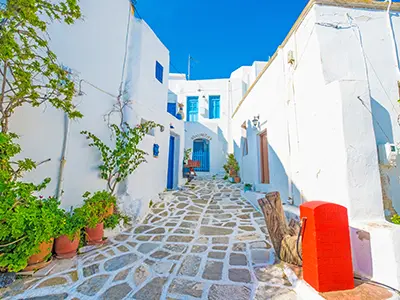
Zia is a mountain village sitting high in pine-forested Mount Dikaios. It's known for gorgeous views of the island's north coast and across the Aegean to Turkey. The sunsets here are spectacular, and the village features whitewashed buildings and blue-capped domes.

Zia sprawls beneath Mount Dikaios and is best known for traditional architecture and wonderful views of the coast.

Learn more about the highlights of the island in our guide: Highlights of Kos..

Yes! Nisyros offers the once-in-a-lifetime opportunity of walking on an actual volcanic crater. The volcano is one of the more active but less known volcanoes in Greece. The last volcanic eruptions in 1881-87 formed a moonscape with colorful craters and very active fumaroles. The island is only about an hour from the port of Kardamena.

On Nisyros, you'll visit Mandraki, the island's capital with sugar-cubed houses in an amphitheatre-shaped town, a medieval castle, and the cliff-side monastery of Panagia Spiliani. You'll also head to the old village of Nikia on the edge of the Stefanos crater, where you can feel the heat from the crater's edge.

Visiting Kalymnos from Mastichari or taking a three-island tour (Kalymnos - Pserimos - Plati) are two of the most popular must-dos. Turkey's coast is only 30-40 minutes away, offering visitors the chance to discover another country.

Leros is also accessible - a serene island with pristine seas that's becoming a popular scuba diving destination.

Yes! Kos has a variety of outdoor activities including cycling and mountain biking. The island offers the opportunity to appreciate its natural landscape up close. Cycling is high up on the list of activities for visitors who make sport an integral part of their daily lives even while on holiday.

The relatively flat terrain around Kos Town makes it particularly bicycle-friendly.

Kos is a paradise of high-quality water activities including windsurfing, kitesurfing, parasailing, jet ski, pedal boat, flyboard, stand up paddle, wakeboarding, waterskiing, kayaking, hobie cats, bananas, ringos, and crazy sofa rides.

In almost every beach on the island, travelers will find all sorts of water-sport services suitable for all ages.

Psalidi, Mastihari, Tigaki, Kefalos, and Kohilari host the most popular windsurfing and kitesurfing centres. Kos is blessed with steady side-shore winds that make these sports ideal for all levels. The best months to practice are from June to September, with August being the windiest month.

Agios Stefanos beach in Kefalos is one of the most Instagrammable beaches in Kos, featuring fine yellow sand, a cosmopolitan vibe, and views of the islet of Kastri with its iconic white and blue church.

According to local custom, the most daring swimmers reach the islet and ring a small bell at the side of the church. Nearby, you can see ruins of Christian basilicas decorated with beautiful mosaics.

The Archaeological Museum at Eleftherias Square houses important finds from the island's long history. The International Hippocratic Foundation of Kos, built where Hippocrates is believed to have been born, features a museum with knowledge about Hippocratic medicine and botanical gardens with more than 100 therapeutic plants and herbs.

Learn more about the must-see sights and experiences on the island in our guide: Places to Visit in Kos..

Yes! You can head to the village of Zia where a feast of meze, wine, dancing, and music awaits. You'll enjoy delicious traditional Greek dishes with unlimited wine, followed by a whirlwind show of traditionally costumed dancers performing to bouzouki music. Kids are welcome too.

Yes, you can book a ferry to Bodrum for the day - remember to bring your passport. The customs on the way back to Kos are very thorough. The crossing takes about 30-40 minutes, offering a chance to experience Turkish culture and sights, including shopping opportunities.

BUY YOUR TICKET TO BODRUM

Beyond historical monuments and beaches, Kos offers a full-day jeep safari, boat tours to explore the sea bottom, go-karts, tennis, mini soccer, mini golf, bowling, a train city tour, and watching movies under the stars at the island's open-air cinema.

You can also go trekking or mountain biking, play beach volleyball, try horseback riding on the slopes of Mount Dikeos, or visit local wineries for wine tasting.

Practical Information for Kos Island

Kos is accessible by air via Kos Island International Airport "Hippocrates" (KGS), with direct flights from many European cities during summer and year-round connections from Athens (45 minutes).

You can also take a ferry to Kos from Bodrum, Piraeus (Athens) taking 10-12 hours, Rhodes, Kalymnos and other nearby islands.

BUY YOUR TICKET TO KOS

The best time to visit Kos is from May to October, with July and August being the hottest and busiest months. June and September offer warm weather with fewer crowds. April-May and October are ideal for cycling, sightseeing, and exploring archaeological sites with pleasant temperatures.

Kos is part of Greece and the EU Schengen zone. EU citizens need only a valid ID card. Visitors from the US, Canada, Australia, and many other countries can stay visa-free for up to 90 days within a 180-day period.

The Euro (€) is the official currency. Credit and debit cards are widely accepted in hotels, restaurants, shops, and attractions. ATMs are plentiful throughout the island, making it easy to access cash when needed.

Greek is the official language. English is very widely spoken in tourist areas, hotels, restaurants, and shops, as Kos is one of Greece's most popular tourist destinations. German and Italian are also commonly spoken in tourist areas.

Kos offers multiple transportation options: rental cars, scooters, bicycles, and ATVs are popular. The island has an excellent public bus network (KTEL) connecting all major towns and beaches. Taxis are readily available. Kos Town is very bike-friendly with dedicated cycle paths.

Not absolutely necessary, especially if you're staying in Kos Town or major beach resorts with good bus connections. However, renting a car or scooter gives you flexibility to explore remote beaches, mountain villages, and attractions at your own pace.

Learn more about the must-see sights and experiences on the island in our guide: Places to Visit in Kos.

Yes, ATMs are widely available throughout Kos, particularly in Kos Town, Kardamena, Kefalos, Tigaki, and other tourist areas. Most accept international cards. It's still wise to carry some cash for small purchases and beach tavernas.

Shops typically open from 9:00 AM to 2:00 PM and 5:30 PM to 10:00 PM. Supermarkets often stay open longer. Restaurants open for lunch around noon and for dinner from 6:00 PM until late. In tourist areas, many establishments stay open continuously during summer. Some shops close on Sunday afternoons.

Tap water is generally safe to drink in Kos Town and most tourist areas, meeting EU standards. However, many locals and visitors prefer bottled water, which is inexpensive and widely available. In remote areas, it's advisable to use bottled water.

Kos uses Type C and Type F plugs with a standard voltage of 230V and frequency of 50Hz. Visitors from the US, UK, and other countries may need a plug adapter and possibly a voltage converter for their electronic devices.

Yes, Kos is very safe for travelers. Crime rates are low, and the island has a well-established tourism infrastructure. Standard precautions apply: watch your belongings in crowded areas, don't leave valuables on beaches or in rental vehicles, and be cautious on scooters.

Pack light, breathable summer clothing, swimwear, sunscreen (high SPF), a hat, sunglasses, and comfortable walking shoes or sandals. Bring modest clothing for visiting churches and monasteries. A light jacket is useful for evenings and air-conditioned spaces. Don't forget cycling shorts if you plan to explore by bike.

Kos has a modern general hospital in Kos Town with emergency services and specialists. Several private clinics and medical centers serve tourist areas. Pharmacies are well-stocked throughout the island. EU citizens should bring their European Health Insurance Card (EHIC). Travel insurance is recommended.

The European emergency number is 112.

Specific numbers include:

Police: 100
Ambulance: 166
Fire Department: 199
Tourist Police: 22420-22444
Coast Guard: 108

Most tourist accommodations have emergency contact information readily available.

Mobile coverage is excellent throughout Kos, including most beaches and remote areas. Major Greek carriers include Cosmote, Vodafone, and Wind. EU visitors can use their phones without roaming charges. Free Wi-Fi is available in most hotels, restaurants, and cafes.

The main tourist information office is in Kos Town near the harbor. Additional information points are located at the airport and major resort areas. Hotels, travel agencies, and rental offices provide maps and information. Tourist Police can assist with problems or questions.

Tipping is appreciated but not obligatory. In restaurants, leaving 5-10% or rounding up the bill for good service is customary. Taxi drivers appreciate rounding up the fare. Hotel staff (cleaners, porters) may be tipped €1-2. Bar staff appreciate small tips for good service.

Drone use in Greece requires registration with the Hellenic Civil Aviation Authority. Flying near archaeological sites (including the Asklepion and Castle of the Knights), military installations, and the airport is strictly prohibited. Always check current regulations and obtain necessary permissions before flying.

Kos has both organized beaches with sunbeds, umbrellas, and facilities (for a fee, typically €8-15 per set) and many free beaches. Popular organized beaches include Tigaki, Mastichari, and Kardamena. Paradise Beach and Camel Beach offer beach club experiences. Many quieter, unspoiled beaches are free.

Standard EU customs regulations apply. Antiquities cannot be exported without special permission. Be aware of duty-free limits on tobacco, alcohol, and perfumes. If traveling from Turkey, declare all purchases. Prescription medications should be accompanied by a prescription or doctor's note.

Kos has good accessibility compared to many Greek islands. Kos Town is relatively flat with paved sidewalks. Many modern hotels have accessible rooms and facilities. The beachfront promenade is wheelchair-friendly.

However, some archaeological sites have uneven terrain. Organized beaches generally have better access than remote ones. It's advisable to contact accommodations in advance to confirm accessibility features.

You may also visit Kos Island Guide for planning your trip to this island.

Culture & Customs in Kos Island

Organized in honor of the founding father of modern medicine, Hippocrates, the annual cultural festival of Kos has been running for over 30 years and is the island's single cultural festival.

Events include art exhibitions, music concerts, theater performances, traditional dancing, sports and athletic races, religious festivities, group activities for children, book presentations, and gastronomic fairs. The summer edition usually starts in early June and ends around late October.

Hippocrates was the first doctor in history, father of medicine, and author of the Hippocratic oath. He was born in Kos Island in 460 BC and received his medical training at the Asclepeion of Kos. His legacy is considered the most important landmark of the island, and the Medical School of Kos was one of the most famous in Ancient Greece.

The island's famous local cheese is called "krasotyri" - literally wine cheese. The recently labeled P.D.O product (Protected Designation of Origin) by the European Union, also known as possa cheese, is literally dipped into red wine. It is a local goat's cheese variety called Posas that is cured in local red wine, making it unique to the island.

Traditional dishes include pitaridia (lasagna boiled in meat broth), katimeria, Pasha macaroni, stuffed zucchini flowers, pork cooked with bulgur (pligouri), dolmadas (stuffed vine leaves), ntolmadakia, and makarounes (pasta served with roasted pork).

Chtapodokeftedes (octopus balls) are traditional dumplings filled with octopus, herbs, and spices, served as an appetizer.

Kanelada is a unique cinnamon-flavored beverage that is a Kos specialty. Served cold in summer or hot in winter, it's both refreshing and aromatic. The recipe dates back to ancient times when Kos was famous for its healing traditions. It's the ideal summer drink when cold and perfect in winter when warmed up.

Most Easter customs begin on the Saturday of Lazarus when Koan women bake little lazarakia (Greek Lazarus bread) shaped like a man wrapped in a shroud to commemorate Lazarus of Bethany. On Holy Tuesday (Fig Tuesday), traditional Easter cookies (koulourakia) are baked.

On Holy Wednesday, households become fragrant with mastic and mahlab-flavoured tsoureki Easter bread, with three braids symbolizing the Holy Trinity.

Unlike other Greek islands where lamb roasted at the spit is the centerpiece, Kos Island's traditional meal is lamb stuffed with offal, rice, and aromatic herbs (mint is essential) and baked in an oven. Easter Sunday is a vibrant celebration with families and friends gathering outdoors for this special feast.

Traditional dances include the ballo (dating to the period of Frankish rule), the syrtos dance from Constantinople and Rhodes, the kalamatianos, and many other dances. The songs and dances have diverse subject matter including religion, social issues, history, family, agriculture, weddings, and more.

The feast of Agios Georgios on April 23 is always celebrated with horse races at the Gate of Kos. The feast of Agios Ioannis on June 24 is accompanied by the custom of the fire ("of the torch") and the ivy, where young and old jump over the flames of the fire, followed by local dances.

The traditional men's costume of Kos features primarily the island breeches (vraka), either in black or blue, the shirt, and the velvet "yialeli".

Well-born girls, on holidays or wedding days, wore the "tsakki" on their heads - a valuable headscarf woven from pure silk with floral embroidery. They wore velvet-embroidered slippers or short leather boots, and in summer wore "wooden" sandals with wooden soles.

The island's abundant flora, with trees and bushes rich in aromas and nutrients, constitute the perfect source for the creation of unique honey, rich in taste and unmatched aroma.

Hippocrates considered honey to be a preventative medicine and praised its beneficial health-giving properties, advocating its consumption by both healthy and ailing individuals on a regular basis.

Genuine Greek hospitality is second to none in Kos, with locals being eager to fill your trip with local flavors, customs, and festivities. Kos' recipes are served with a lavish dose of the island's genuine philoxenia (hospitality), made using Kos' precious treasures generously offered by the abundant fields and plentiful sea.

Several festivities and fairs are related to religion, celebrated with local delicacies and traditional dancing in churchyards. Some others, with deep-rooted loyalty to tradition, revive with a sole focus on passing down the island's customs. Greek Orthodox traditions remain central to island life.

Kos is considered a "blissful island" where, for many centuries, Christians (both Catholic and Orthodox), Muslims, and Jews dwelled side by side. Today, there is a Roman Catholic church and a mosque for the Turkish Muslim community, with a Turkish population estimated at 2,000 people, particularly in the village of Platani (Kermentes).

Name Days are celebrated throughout the area following Greek Orthodox tradition. Each saint has a special feast day, and people named after that saint celebrate on that particular day, which is often more important than birthdays in Greek culture.

Katimeria are traditional small cheese pies made with local wine cheese (krasotyri), served drizzled with honey. These are often called lambropites (Easter pies) as tradition has it that they are usually prepared on Holy Thursday during Easter.

Kos's fishing villages serve some of the freshest seafood in Greece. A traditional mezze spread includes grilled octopus (tender, charcoal-grilled with lemon and olive oil), fried calamari, fresh fish, and various shellfish. The island's coastal location ensures daily fresh catches.

Gastronomy in Kos has been shaped by many cultures and civilizations over the centuries. Ottoman influences blended with Aegean recipes is an example of the island's vast gastronomic diversity. This creates a unique fusion of Mediterranean and Middle Eastern flavors.

In the center of Kos town is the Plane Tree of Hippocrates, a dream temple where the physician is traditionally supposed to have taught. It remains an important cultural and historical landmark symbolizing the island's medical heritage.

Learn more about the must-see sights and experiences on the island in our guide: Places to Visit in Kos.

Kos is one of Greece's most fertile islands, known for delicious local products such as honey, extra-virgin olive oil, local cheeses (posas/krasotiri, feta, mizithra, and anthotiro), wines from vineyards on Mount Dikeos slopes, tomatoes, melons, and watermelons. The island's rich volcanic soil and water abundance support diverse agriculture.

Cultural events are organized by many bodies including the Municipality of Kos Cultural Centre, the Provincial Cultural Committee, the Lyceum of Greek Women of Kos (Lykieo Ellinidon), which works with great devotion to keep traditions alive.

They organize choruses, theatre teams, dance groups, and publish works on the history, culture, and traditions of the island.

At many weddings even today, singers and lyricists sing special songs as the bride and groom lead the dance (the siano).

Traditional Greek Orthodox wedding customs are followed, including the wearing of stefana (wedding crowns), the common cup ceremony, and celebrations with traditional dances and feasting. Greek weddings on Kos blend ancient customs with island-specific traditions.