Lesvos Island Menu
Meander Feribot
LESVOS
Island of the Poets - Ayvalik & Aliaga routes
Chios Island Menu
Meander Feribot
CHIOS
Island of Mastiha - Cesme routes
Samos Island Menu
Meander Feribot
SAMOS
Island of Pythagoras - Kusadasi routes
Kos Island Menu
Meander Feribot
KOS
Island of Hippocrates - Bodrum & Turgutreis routes
Rhodes Island Menu
Meander Feribot
RHODES
Island of Colossus - Marmaris routes
Kastellorizo Island Menu
Meander Feribot
KASTELLORIZO
Island of Blue Grotto - Kas routes
Patmos Island Menu
Meander Feribot
PATMOS
Island of St John - Kusadasi routes
Special Offers for Chios island.
DESTINATION
GREEK ISLANDS
We provide ferry tickets to the Greek islands from Turkey's Aegean coast. Explore our routes and find your perfect crossing.
We provide ferry tickets for all the Greek islands. Please do not hesitate to contact us for the most suitable ferry connections for your travel.
FERRY HIGHLIGHTS
DEPARTURE
KUSADASI
ARRIVAL
SAMOS
DEPARTS
EVERYDAY
TICKETS RATES
FROM 37€
DURATION
APPROX 1 HR

FAQs ABOUT SAMOS

ISLAND of PYTHAGORAS

Considering a ferry journey from Kusadasi to the verdant island of Samos? This FAQ guide provides comprehensive answers to all your questions about traveling to the birthplace of Pythagoras and one of the Aegean's most naturally beautiful destinations.

Whether you need information about ferry schedules, ticket purchasing, visa procedures, or want to discover Samos's famous wineries and pristine beaches, you'll find everything you need below.

From hiking through lush mountain villages to exploring ancient ruins and savoring local Samian wine, these frequently asked questions will ensure you're fully prepared for your journey to this captivating Greek island paradise.

Got questions? We've got answers!

Samos Island

Samos is a Greek island located in the eastern Aegean Sea, extremely close to the Turkish coast (just 1.6 km at its nearest point, near Kusadasi). It is part of the North Aegean region and sits between Chios to the north and the Dodecanese islands to the south, making it a strategic gateway between Greece and Turkey.

Samos covers approximately 476 square kilometers (184 square miles) with a coastline of about 159 km. The permanent population is around 33,000-35,000 residents distributed across various towns and villages.

The main population centers are Vathy (Samos Town), Karlovasi, and Pythagoreio, with the population increasing significantly during summer tourism season.

Samos is accessible via Samos International Airport "Aristarchos of Samos," with year-round flights from Athens and seasonal connections from Thessaloniki and various European cities.

By sea, ferries connect Samos to Piraeus (Athens), other North Aegean islands (Chios, Ikaria, Lesvos), and the Dodecanese. The island serves as an excellent base for island-hopping.

You can also reach the island directly from Turkey by ferry to Samos from Kusadasi that which operates daily during summer season, on weekends in November and December.

BUY YOUR TICKET TO SAMOS

Samos is world-renowned as the birthplace of the mathematician Pythagoras and the philosopher Epicurus.

The island is famous for its exceptional sweet Muscat wine (Samos wine), the ancient Heraion temple (UNESCO World Heritage Site), beautiful beaches, lush green landscapes, traditional mountain villages, and its proximity to the ancient city of Ephesus in Turkey.

Learn more about the must-see sights and experiences on the island in our guide: Places to Visit in Samos.

Samos enjoys a Mediterranean climate with hot, dry summers and mild, relatively wet winters. Summer temperatures average 28-33°C (82-91°F), while winter temperatures range from 10-16°C (50-61°F).

The island is greener and lusher than many Aegean islands due to higher rainfall and natural springs, supporting abundant vegetation including pine forests and vineyards.

The ideal visiting period is May through October. May-June and September-October offer perfect weather with comfortable temperatures and fewer crowds.

July and August are peak season with hot weather and busy beaches. Spring (April-May) is beautiful with wildflowers blooming, while autumn (September-October) provides warm seas and grape harvest season in the vineyards.

BUY YOUR TICKET TO SAMOS

Greek is the official language. In tourist areas, hotels, restaurants, and shops, English is commonly spoken. Due to proximity to Turkey and Turkish visitors, some Turkish is also understood in border areas. German and Italian are spoken in some tourism businesses, reflecting European visitor demographics.

The Euro (€) is the official currency. ATMs are readily available in all main towns (Vathy, Karlovasi, Pythagoreio) and larger villages. Credit and debit cards are widely accepted in hotels, restaurants, and shops, though smaller tavernas and village businesses may prefer cash, especially in more remote areas.

Key destinations include Vathy/Samos Town (the capital), the picturesque ancient port of Pythagoreio, Karlovasi (second-largest town), the mountain village of Kokkari (former fishing village), traditional Marathokampos, charming Mytilinioi, the wine-producing village of Malagari, hillside Manolates and Vourliotes, and the remote mountain village of Ampelos.

Learn more about the must-see sights and experiences on the island in our guide: Places to Visit in Samos.

Major attractions include the Heraion (Temple of Hera, UNESCO World Heritage Site), the Tunnel of Eupalinos (ancient engineering marvel), Archaeological Museum of Samos, Pythagoreio harbor and ancient walls, Potami Waterfalls, wine museums and vineyards, traditional mountain villages with stunning views, Byzantine monasteries like Panagia Spiliani, and the Natural History Museum.

Learn more about the must-see sights and experiences on the island in our guide: Places to Visit in Samos.

Excellent beaches are found throughout the island! Popular options include Potokaki (long sandy beach), Psili Ammos (fine golden sand), Tsamadou (pebble beach with turquoise waters), Lemonakia, Mikro and Megalo Seitani (secluded, accessible by boat or hiking), Kokkari beach, Karlovasi beaches, Votsalakia (Kampos), and the organized beach at Pythagoreio. The island offers both sandy and pebble beaches.

Get to know the island before you arrive — explore our Samos Island Guide for must-see places, local tips, and suggested itineraries.

Samos features dramatic mountainous terrain, with Mount Kerkis rising to 1,434 meters, making it the second-highest peak in the Aegean islands.

The island is known for its lush vegetation—pine forests, plane trees, and cypress—along with terraced vineyards, natural springs and waterfalls, fertile valleys, and a striking contrast between rugged mountains and beautiful coastlines.

Samos has a rich history dating to 3000 BC. It flourished in the 6th century BC under tyrant Polycrates, becoming a major cultural and commercial center that produced Pythagoras, Epicurus, and astronomer Aristarchus.

The island was ruled by Persians, Athenians, Romans, Byzantines, and Ottomans (1550s-1912). Samos enjoyed semi-autonomous status under Ottoman rule and joined Greece in 1912. The Heraion temple was one of antiquity's largest.

Transportation options include rental cars and scooters, which are recommended for exploring the mountainous terrain, as well as a reliable KTEL bus network connecting main towns and beaches with Vathy.

Additionally, taxis are available in main towns, along with organized tours and excursions, and boat taxis to reach secluded beaches. Due to mountainous roads and dispersed attractions, having your own vehicle provides the most flexibility.

Get to know the island before you arrive — explore our Samos Island Guide for must-see places, local tips, and suggested itineraries.

Samos is famous for its sweet Muscat wine (available at wineries and shops), excellent honey (particularly pine and thyme honey), olive oil, herbs and spices, ceramics and pottery (especially from Marathokampos), traditional textiles and embroidery, handmade leather goods, locally produced soaps and cosmetics, ouzo, and products made from local stone. Wine tasting at local wineries is a must.

Samos cuisine emphasizes fresh seafood and traditional Greek dishes with strong local character, including specialties like revithada (chickpea stew), hortopita (wild greens pie), fresh fish and octopus, locally produced cheeses, abundant vegetable dishes from the island’s fertile land, grilled meats, and desserts paired with Samos wine.

In the mountains, local tavernas serve authentic recipes that have been passed down through generations.

Samos experiences moderate tourism compared to islands like Santorini or Mykonos. Popular areas like Pythagoreio and Kokkari can be busy in peak season (July-August), but the island's size and mountainous terrain mean many quiet areas remain.

Traditional mountain villages maintain authentic character with minimal tourism impact. Shoulder seasons offer a particularly peaceful experience.

Excellent hiking opportunities abound across the region, offering a wide variety of scenic landscapes.

Notable trails include the paths to Megalo and Mikro Seitani beaches, routes through the Nightingale Valley connecting mountain villages, trails around Mount Kerkis, the path to Potami Waterfalls, walks through vineyards and olive groves, coastal paths, and routes linking traditional villages such as Manolates and Vourliotes. The varied terrain suits all hiking levels.

Samos offers diverse accommodations, ranging from hotels and traditional guesthouses to villa rentals, along with numerous tavernas and restaurants serving authentic cuisine.

The island also provides car and scooter rental agencies, pharmacies, medical facilities including a hospital in Vathy, banks and ATMs, tourist information services, wineries with tasting rooms, water sports centers, and local shops. Infrastructure is well-developed while maintaining island character.

Yes, Samos is excellent for families! The island offers safe beaches with various amenities (like Potokaki and Psili Ammos), fascinating historical sites including the Tunnel of Eupalinos that captivates children, natural attractions like waterfalls, traditional villages to explore, family-run tavernas with welcoming atmospheres, calm waters suitable for swimming, and a relaxed pace perfect for family holidays seeking authentic experiences.

The island hosts various festivals including the Samos Wine Festival (summer, celebrating local wines), the Pythagoreia Festival (July, cultural events celebrating Pythagoras), traditional panigyria (religious feast days in villages with music, dancing, and food), Easter celebrations with unique local customs, the Feast of the Assumption (August 15th) with major celebrations, folk music and dance performances, and various summer cultural events in Pythagoreio and Vathy.

Visa requirements depend on your nationality. As part of Greece and the Schengen Area, EU citizens need only a valid ID card. Many other nationalities (including US, Canadian, Australian) can visit for up to 90 days within 180 days without a visa.

Check current requirements based on your citizenship before traveling.

Kusadasi Samos Ferry Departures

The ferry journey from Kusadasi to Samos typically takes 1 hour. The distance between Kusadasi and Samos is approximately 20 nautical miles (37 kilometers).

You may also check How to Get to Samos section for detailed information.

BUY YOUR TICKET TO SAMOS

Meander Feribot provides ferry service everyday from April until the end of October to both ports of Samos; Pythagorion and Vathy, departs from Kusadasi: 09:00 and from Pythagorion & Vathy ports of Samos at 18:00. In November and December company operates on weekends to Vathy port of Samos island.

Please also check Kusadasi Samos Ferry Departures for detailed information.

BUY YOUR TICKET TO SAMOS

Ferry ticket prices:

One Way:
37€ adults, 27€ child (ages 6-12), 5€ infants (ages 0-5)

Same Day Return tickets:
47€ adults, 37€ child (ages 6-12), 5€ infants (ages 0-5)

Round-trip tickets:
55€ adults, 45€ child (ages 6-12), 5€ infants (ages 0-5)

Please check Kusadasi Samos Ferry Tickets for the details.

BUY YOUR TICKET TO SAMOS

Meander Feribot (the primary operator since 1977), has been organizing services to both Vathy and Pythagoreion ports since 1977 and operates daily between April 1 and October 31.

Visa requirements depend on your nationality. Turkish citizens with ordinary (red) passports require a valid Schengen visa to enter Greece. A special "Visa Express" program is available for Turkish citizens for short-term visits (1-7 days) to designated Greek islands.

EU citizens can travel with just a valid ID card or passport. Non-EU citizens should check Schengen visa requirements for their specific nationality. Since Greece is part of the Schengen zone, standard EU visa rules apply.

The main ferry season operates from April 1 through October 31, with daily services throughout this period. Peak season runs from beginning of May through mid October with the highest frequency.

During early season (April) and late season (October 15-31), ferries operate with reduced frequency. November and December sees very limited service with only weekend sailings per week. Off-season (January to March) has no ferry services.

You may check Kusadasi Samos Ferry Departures for more information.

BUY YOUR TICKET TO SAMOS

No, ferries operating between Kusadasi and Samos do not allow vehicle transportation. All vessels on this route are passenger-only ferries. There is no provision for vehicle crossings on this route.

However, car and scooter rentals are readily available in Samos at both Vathy and Pythagoreion ports at competitive rates, making it easy to explore the island independently after arrival.

It's strongly recommended to arrive at least 60-90 minutes (1-1.5 hours) before your scheduled departure time. This allows sufficient time for ticket collection (if needed), security checks, passport control, customs procedures, and boarding.

Ferry operators often advise arriving 1.5 hours early. During peak summer season, ports can be very busy, and passport control lines may be long, so arriving early is essential to ensure smooth processing.

Yes, you can easily buy ferry ticket online through our website.

BUY YOUR TICKET TO SAMOS

All passengers must carry a valid passport (valid for at least 6 months beyond travel date) for this international crossing. EU/Greek citizens may use their national ID card instead. Non-EU citizens need a passport and may require a Schengen visa depending on travel direction and nationality.

You'll also need your ferry ticket confirmation (printed or digital). Turkish citizens whose passports contain entry and exit stamps for the Turkish Republic of Northern Cyprus (TRNC) are not permitted to enter Greece by the Greek authorities.

Yes, ferry operators allow pets on board. You'll need to carry necessary pet documentation, including a pet passport with required vaccinations. If traveling with a pet, you must inform the ferry company in advance, carry all necessary documentation, and take full responsibility for your pet.

Ferries offer amenities suitable for the 1hour journey. You'll find comfortable seating areas, open-air panoramic decks for sightseeing and sea views, snack bars serving beverages and light refreshments, restroom facilities, and comfortable indoor areas.

Due to the short crossing time, cabins are not available on this route. All standard seating is included in your ticket price. Bar services offer snacks and drinks during the journey.

Yes, day trips from Kusadasi to Samos are very popular and highly feasible. With multiple daily departures during summer season, you can take a morning ferry (at 09:00), spend 6-8 hours exploring Samos, and return on an afternoon/evening ferry (at 18:00).

This gives sufficient time to visit Vathy or Pythagoreion, enjoy beaches, explore villages, visit archaeological sites, and experience Greek cuisine. Remember to allow extra time for passport control and customs at both ports (approximately 30-60 minutes total).

Get to know the island before you arrive — explore our Samos Island Guide for must-see places, local tips, and suggested itineraries.

BUY YOUR TICKET TO SAMOS

The Kusadasi ferry port (Kusadasi Egeports/Kusadasi Cruise Port Kusadasi Egeports, Kusadasi Cruise Port location on Google Maps) is located just a 5-minute walk from the city center, making it extremely accessible. The port is approximately 80 kilometers from Adnan Menderes Airport.

The Meander Travel office is conveniently located right across from the harbor. The port area offers useful services including ATMs, restaurants, tourist landmarks, and a tourist information desk just outside the terminal. You can reach the port easily by walking, taxi, or local buses from most parts of the city.

Yes, there's a 1-hour time difference. Greece (Samos) is 1 hour behind Turkey (Kusadasi). This means when it's 10:00 in Kusadasi, it's 09:00 in Samos.

Late March → Late October - No difference (both UTC+3)
Late October → Late March - Turkey is 1 hour ahead

Remember to adjust your watch when traveling between the two countries.

Meander Feribot allows reasonable luggage amounts with no strict restrictions, typically up to 40-50 kg per passenger.

You can keep luggage beside you or store it in designated luggage areas shown by crew during boarding. There are no strict size restrictions typically enforced. Label your luggage clearly and don't exceed recommended weight for smooth boarding and adequate storage space.

Yes, it's possible to buy tickets at the port on the day of travel, but this is not recommended, especially during peak summer season. Ferries can sell out quickly, and advance booking online ensures you secure your spot.

BUY YOUR TICKET TO SAMOS

The best time depends on your priorities. Late spring (May-June) and early autumn (September-October) offer ideal conditions with pleasant weather, fewer crowds, good ferry frequency, and comfortable temperatures for sightseeing.

Peak summer (July-August) provides the most frequent service with daily departures, warmest weather, and the longest days, but expect crowds and higher prices.

The main operating season is April 1 to October 31. Winter months see very limited or no service. Samos is noted for its lush natural environment and beautiful beaches best enjoyed from May through October.

Yes, Turkish citizens born in Northern Cyprus (as mentioned on their passport) or those with Northern Cyprus entry stamps may be denied entry to Chios due to international disputes between Greece and Northern Cyprus. Check your passport carefully before booking to avoid refund issues.

Ferry services may be delayed or canceled due to adverse weather conditions, particularly strong winds, rough seas, or storms. Winter months (November-February) see the highest risk of weather-related disruptions.

Ferry operators prioritize passenger safety and will notify passengers of cancellations in advance when possible. In case of cancellation, tickets can typically be rescheduled for the next available sailing at no extra charge.

Ferries from Kusadasi arrive at two ports in Samos: Vathy (also called Samos Town) and Pythagoreion.

Vathy is the capital and main port of Samos, located in the northeast, featuring restaurants, bars, hotels, banks, and parking facilities.

Pythagoreion is located on the southeastern coast with tavernas, shops, and parking lots at the port. The specific arrival port varies by date and ferry schedule.

Meander Feribot provides ferry service everyday from April until the end of October to both ports of Samos; Pythagorion and Vathy. In November and December company operates on weekends to Vathy port of Samos island.

Our cancellation and refund policy depends on when you notify us of your cancellation.

Please kindly check "Legal Notes" section.

Kusadasi Samos Ferry Tickets

Ferry ticket prices:

One Way:
37€ adults, 27€ child (ages 6-12), 5€ infants (ages 0-5)

Same Day Return tickets:
47€ adults, 37€ child (ages 6-12), 5€ infants (ages 0-5)

Round-trip tickets:
55€ adults, 45€ child (ages 6-12), 5€ infants (ages 0-5)

Please check Kusadasi Samos Ferry Tickets for the details.

BUY YOUR TICKET TO SAMOS

Generally, Kusadasi Samos ferry tickets are non-refundable. The terms explicitly state that passengers have no right of withdrawal and tickets are non-refundable.

Please kindly check "Legal Notes" section.

Yes, you may request a one-time free date change up to 24 hours before the departure time. Changes requested within 24 hours of departure may be subject to restrictions. Please contact us as soon as possible if you need to modify your booking.

Yes, you can change your Kusadasi Samos ferry tickets to open ticket by contacting us at least 24 hours before the departure time. However, these tickets must be used within the same calendar year.

Refunds are always issued to the same credit card that you used for your booking. Depending on your bank, it usually takes 2-7 business days for the refund to be processed and for the funds to appear in your bank account.

Generally, tickets are company-specific, so you would likely need to cancel and rebook with a different operator.

Children discount is also available for 0-5 and 6-12 ages.

Please check Kusadasi Samos Ferry Tickets section for more details.

Our cancellation and refund policy depends on when you notify us of your cancellation.

Please kindly check "Legal Notes" section.

The trip may be canceled or postponed due to reasons beyond the Company's control, such as bad weather and sea conditions, strikes, technical malfunctions, war, natural disasters, or official decisions.

In this case, the passenger can only change their ticket to a different date, subject to availability; no refund or compensation will be paid.

Meander Feribot collaborates with ferry companies operating routes throughout the Aegean Sea. We currently offer:

ferry to Lesvos from Ayvalik,
ferry to Lesvos from Aliaga,
ferry to Chios from Cesme,
ferry to Samos from Kusadasi,
ferry to Kos from Bodrum,
ferry to Kos from Turgutreis,
ferry to Rhodes from Marmaris
ferry to Kastellorizo from Kas.

BUY YOUR TICKET TO GREEK ISLANDS

You can book ferry tickets online on meanderferibot.com in just a few quick and easy steps. Booking a ferry has never been simpler! Here's how it works:

1. You choose departure and destination ports, one-way or return tickets and travel dates. You can also select the number of passengers. Click on the 'Search' button to proceed to step 2.

2. In step 2, all available ferry crossings and itineraries will be displayed. Please select the itinerary that you prefer and click 'Buy Your Ticket'.

3. In step 3, you will have to provide contact details for the lead passenger and enter the passenger details along with credit card details. Now you will click 'Pay Now' button. You will be redirected to our bank's secure payment gateway to complete your booking.

Your ferry tickets are booked! We will send you a booking confirmation email with your booking details and all the necessary information for your trip. Enjoy your holidays!

BUY YOUR TICKET TO SAMOS

Yes, it's recommended to buy Kusadasi Samos ferry tickets early and make advance reservations to guarantee your booking, especially during peak summer season.

BUY YOUR TICKET TO SAMOS

Once you have made a payment and your booking has been successfully completed, you will be redirected to the booking confirmation page, where you will find your booking details. You will also receive a booking confirmation email with all the necessary information for your trip.

You can book Kusadasi Samos ferry tickets through our website or by visiting our office up to 1 hour before departure.

BUY YOUR TICKET TO SAMOS

No, it is not necessary to confirm the departure time of your ferry, as it is uncommon for ferry schedules to change. We thus recommend that you check your email once on the day before your departure and once on the day of your ferry trip.

You can also contact us the day before your trip to get the latest information on schedule changes and delays.

Yes, we offer special rates for group bookings, but advance booking is required, especially during the peak summer season (July-August), to ensure availability and secure the best rates.

For tailored group rates and assistance, please contact us and our team will get back to you promptly.

You can use e-tickets on your phone.

Passengers should arrive at least 60 minutes before departure Kusadasi to Samos. During busy summer periods, arriving at least 1 hour early is highly recommended. Please make sure that you allow enough time for check-in and other procedures on international ferry routes.

It is important to note that if you arrive late for check-in or boarding, you may not be allowed to travel. In this case, you will most likely not get a refund.

You can easily make a request for the confirmation email to be re-sent to you by contacting us.

Ferries depart from the port of Kusadasi, just a 5-minute walk from the city center. Kusadasi Egeports Port is where Meander Feribot operates Kusadasi Samos ferry services.

The port area offers useful services such as ATMs, restaurants and tourist landmarks, with a tourist information desk just outside the terminal.

Be prepared to present a valid travel document (ID or passport). The company reserves the right to deny boarding if these documents are not provided. You will first go through check-in at the operator's office and you will continue with custom and passport control procedures before boarding.

Ferry tickets are nominative and require personal details including full name, gender, nationality, and date of birth for issuance. Ferry companies are required by law to record specific details of every passenger traveling for international crossings for customs and immigration purposes.

Attractions & Activities in Samos Island

The Heraion, also known as the Temple of Hera, can be found eight kilometres west of Pythagorion and is one of the most popular tourist destinations on the island.

From the 9th century BC onwards, a series of temples were constructed on this site, the largest of which spans around 45 meters by 80 meters and is supported by at least 100 columns.

This temple was 55.2 metres wide and 108.6 metres, one of the largest floor plans of any Greek temple. In addition to the Pythagorion and the ruins of ancient Samos's capital city, this temple is also a UNESCO World Heritage Site.

Learn more about the must-see sights and experiences on the island in our guide: Places to Visit in Samos.

One of the most famous features is the Eupalinus' tunnel dating from the 6th century BC, which runs 1036 m through the mountainside to bring water to the ancient city, the work of Eupalinus of Megara, Naustrofus' son.

The tunnel is the second known tunnel in history which was excavated from both ends, and the first with a geometry-based approach in doing so. The tunnel is inscribed on the UNESCO World Heritage List along with the nearby Pythagoreion and Heraion of Samos.

The Eupalinos aqueduct was used to supply the city with water for 1,100 years, up to the 7th century AD.

Learn more about the must-see sights and experiences on the island in our guide: Places to Visit in Samos.

Located on the island's southern shore, Pythagorion was once called Tigani until 1955, when it was renamed in honour of Pythagoras, who was born there.

Samos was a great maritime and mercantile state in the sixth century BC, and its old port, built around a protected bay, is now crowded with fishing boats and sleek yachts. The pretty horseshoe shaped harbour is filled with restaurants, ice cream shops and cute places to explore as you walk down.

It's also where a lot of the boat trips go from, and where you'll find the statue of Samos' most famous resident, Pythagoras, the mathematician.

Samos is the island of Pythagoras, the father of mathematics, the astronomer Aristarchus and the philosopher Epicurus. It was also believed to be the birthplace of Hera and the land that hosted the historian Herodotus and the legendary storyteller, Aesop.

Samos is linked with great personalities of the ancient world, such as the philosopher and mathematician Pythagoras, the philosopher Epicurus, who was of Samian birth, and Aristarchus the Samian, who first established the theory of the planet system in the 4th century BC.

The Archaeological Museum of Vathy is located close to the port. It hosts findings from excavations on the island that date from the Prehistoric till the Hellenistic times. The most impressive exhibit is the Colossal Kouros, a man statue of 5.5 m tall.

This museum exhibits artefacts from the Heraion and is housed in the historical residence of the Prince of Samos. The main hall was extended specifically for the most magnificent find, a 4.8-meter-tall marble figure of an Archaic kouros from the sixth century BC.

Learn more about the must-see sights and experiences on the island in our guide: Places to Visit in Samos.

Muscat White is often referred to as Muscat Samos since the variety is closely associated with the island. Muscat vineyards are spread on stone terraces mostly around Karvounis (1,153m), Samos's central mountain, which is also known as Ambelos, after the homonymous village on its northern side.

Samos has a wine-making tradition going back to antiquity, but the oenological leap happened when the Moschato grape was introduced in the 16th century. The Samos Muscat Blanc à Petits Grains is grown on the slopes of Mount Ambelos, on traditional terraces called pezoules.

Learn more about the highlights of the island in our guide: Highlights of Samos.

The 19th-century stone museum building is an exhibit in itself. It was a private winery before becoming a storage and barrel-making facility. The wine museum opened in 2005 after a 2000 restoration, and since then, it has showcased Samos wine artefacts.

These include old photos and production records, vineyards, harvesting presses, cellars, collectable bottles, barrel-making instruments, ancient winemaking apparatus, awards and distinctions. At the end of your visit, sample flavourful wines or shop at the museum's wine store for local goods.

Learn more about the must-see sights and experiences on the island in our guide: Places to Visit in Samos.

One of the most popular beaches in Samos, Tsamadou stretches out across Kokkaris bay like a mirage. The thick pine groves around the bay and green-blue waters give Tsamadou beach a tropical feel, and the small pebbles keep the water incredibly clear, making it prime snorkelling territory.

One of the best-known beaches in Samos, Potami is surrounded by greenery and has incredibly clear water. It's also one of the most photogenic beaches in Samos, with the chapel of Agios Nikolaos above it.

Get to know the island before you arrive — explore our Samos Island Guide for must-see places, local tips, and suggested itineraries.

Natura 2000-protected area around Mikro & Megalo Seitani beaches in Samos are two of the most scenic beaches in Greece. Mikro Seitani is the smaller of the two, with high rocks, emerald waters and a feeling of total seclusion.

Meanwhile, at the slightly larger Megalo Seitani the wow factor is amplified by the sight of Kakoperto Gorge from the sea. They are inaccessible by car and the only way is either by boat or through a long hike from Potami (approx. 1.30 min). Both are unspoilt with no facilities.

Get to know the island before you arrive — explore our Samos Island Guide for must-see places, local tips, and suggested itineraries.
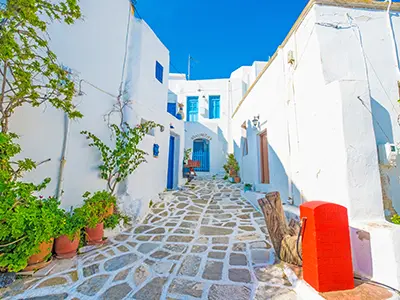
Kokkari, a little fishing town, is almost too picturesque to describe. Located on the northern coast, about 10 kilometres from Samos Town, the colourful resort town was formerly a fishing community.

Today, its narrow quaysides are dotted with cafés and taverns with outdoor seating areas. The gorgeous blue ocean and lengthy pebble beach make it a favourite among windsurfers.

Learn more about the highlights of the island in our guide: Highlights of Samos.

Taking its name from the Greek for vine, Ambelos is your introduction to wine-growing Samos. It is around 300m up Mt Karvouni and is full of picturesque streets and well-maintained houses, typical of Samian architecture.

With old stone houses, cobblestone streets, atmospheric tavernas, Manolates is another example of traditional Samos. The highlights are the pottery and loom weaving workshops where you can witness the traditional crafts being made.

Manolates is a mountain village, it is located 380 meters above sea level, on the slopes of Mount Ambelos and boasts spectacular views of the Aegean Sea, a rich surrounding vegetation and incredible architecture.

Get to know the island before you arrive — explore our Samos Island Guide for must-see places, local tips, and suggested itineraries.

The famous waterfalls are located at the northwest side of Samos, 5 kilometers from the center of Karlovasi city, in the Potami area. The waterfalls are located about 3 km from the estuary of "the river of Kastania", on the beach Potami.

They are located in a canyon created by the river, which is covered by a dense forest of plane trees, ferns and other plants. The walk to the first waterfall takes about 20 minutes through a shaded forest trail. To actually see the waterfalls, you will have to take refreshing dip and wade or swim to the first drop.

Learn more about the highlights of the island in our guide: Highlights of Samos.

The Monastery of Panagia Spiliani is located on top of a hill in Pythagorion. Its location offers a wonderful view of the village and the port. The monastery is an important religious site on the island and offers panoramic views of the surrounding area.

Learn more about the must-see sights and experiences on the island in our guide: Places to Visit in Samos.

Apart from swimming in fantastic beaches and strolling around villages, Samos is a great place for hiking. Many hiking paths cross the green forests in the center of the island, leading to waterfalls and secluded coves.

The island's diverse landscapes offer many opportunities for outdoor activities, including hiking on Mount Kerkis, the second-highest peak in the Aegean. Mount Kerkis is home to several hiking trails, natural springs, small churches, and caves, including the Cave of Pythagoras.

Get to know the island before you arrive — explore our Samos Island Guide for must-see places, local tips, and suggested itineraries.

You don't have to be a pro windsurfer (although you won't be disappointed if you are) to enjoy Mykali beach, around 8km south of Vathi. It's known for good kitesurfing, too. And don't worry if you're into more sedate activities.

Stand-up Paddleboards can be hired here too. Alternatively, there are dive sites right along the south coast, whether you're a wetsuit-and-aqualung or snorkel-and-mask type.

Sailing out of Pythagorios' pretty port, you'll glide through the Ireon village, you'll pass secluded beaches and rocky coves. Whilst being served fresh fruit and refreshments by the crew, you may even be lucky enough to spot a dolphin or two.

Then, you'll relax and top up your tan until it's time to swim ashore at Samipoula. On this cruise, you'll explore the local waters off Samos' east coast, with stops at two of its most enticing beaches - Posidonio and Megali Lakka - as well as a beach barbecue.

Get to know the island before you arrive — explore our Samos Island Guide for must-see places, local tips, and suggested itineraries.

Its name means "small Samos" and it can be easily accessed from the ports of Pythagorio and Ormos Marathokambou. Its beauty attracts many visitors who come to relax in the two sandy beaches.

Spend time here exploring the island's unspoiled landscape, its lone church, or enjoying a dip in the Aegean. The water here is calm and clear, so expect to see plenty of fish.

Get to know the island before you arrive — explore our Samos Island Guide for must-see places, local tips, and suggested itineraries.

There are seasonal ferries from Samos to Kusadasi, Turkey, usually daily in summer. Samos' proximity to Turkey makes it easy to visit the Turkish coast, with regular ferry connections available during the tourist season.

BUY YOUR TICKET TO KUSADASI

Samos Town (sometimes called Vathy or Vathi) was founded in 1832 in a secluded cove on the island's northeast shore.

Modern concrete dwellings border the coast and the hills overlooking the sea, while magnificent Neoclassical mansions line the harbour's horseshoe shape. Many of these now have waterside cafés and restaurants on their lower levels.

Get to know the island before you arrive — explore our Samos Island Guide for must-see places, local tips, and suggested itineraries.

Yes, Samos is very suitable for families. If you are looking for a place with shallow waters, calm weather, and golden sun, my recommendation for the best sandy beach in Samos is Psili Ammos.

The island offers gentle beaches, safe swimming areas, hiking trails suitable for various skill levels, and cultural attractions that appeal to all ages.

Get to know the island before you arrive — explore our Samos Island Guide for must-see places, local tips, and suggested itineraries.

Samos is a multifaceted island that is most vibrant and accessible from May through October. This period offers the classic Aegean experience, with the mountain villages of Manolates and Vourliotes providing a cool escape from the summer sun.

For wine lovers, late August and early September are particularly rewarding, as the Muscat grape harvest begins, and the island celebrates its famous viticulture with various local festivals.

BUY YOUR TICKET TO SAMOS

3 to 4 Days: You can see the main highlights like Pythagoreio, the Heraion temple, and a couple of the northern beaches. 7 Days: The ideal amount of time to explore both the mountainous interior and the coastal villages without rushing.

This allows enough time to experience the island's beaches, historical sites, mountain villages, and natural attractions like waterfalls and hiking trails.

Get to know the island before you arrive — explore our Samos Island Guide for must-see places, local tips, and suggested itineraries.

Practical Information for Samos Island

Samos is accessible by air via Samos International Airport "Aristarchos of Samos" (SMI), with direct flights from Athens (55 minutes) and seasonal connections from European cities. Ferries operate from Piraeus (Athens), taking 11-14 hours, and from nearby islands like Chios, Ikaria, and Patmos.

You can also take a ferry to Samos from Kusadasi, Turkey, making it ideal for both day trips and longer stays.

The best time to visit Samos is from May to October, with July and August being the warmest and busiest months. June and September offer excellent weather with fewer crowds and lower prices.

April-May is beautiful with wildflowers and lush green landscapes, perfect for hiking and exploring villages. September-October is ideal for wine enthusiasts as it's harvest season.

BUY YOUR TICKET TO SAMOS

Samos is part of Greece and the EU Schengen zone. EU citizens need only a valid ID card. Visitors from the US, Canada, Australia, and many other countries can stay visa-free for up to 90 days within a 180-day period.

The Euro (€) is the official currency. Credit and debit cards are widely accepted in hotels, restaurants, and larger shops in tourist areas like Pythagoreio and Vathy. However, smaller villages and traditional tavernas often prefer cash, so it's advisable to carry euros.

Greek is the official language. English is widely spoken in tourist areas, hotels, restaurants, and shops, especially in Vathy, Pythagoreio, and Kokkari. Some locals also speak Turkish due to the island's proximity to Turkey. Learning a few basic Greek phrases is always appreciated.

Samos offers various transportation options: rental cars, scooters, and ATVs are widely available at the airport and in major towns. Public buses (KTEL) connect main towns and villages with reasonable frequency during summer. Taxis are available in towns but should be booked in advance for remote areas or evening travel.

Highly recommended but not absolutely necessary. Samos has a good bus network connecting major towns and beaches. However, a car gives you freedom to explore mountain villages like Manolates and Karlovasi, secluded beaches, wineries, and the famous Tunnel of Eupalinos at your own pace.

Yes, ATMs are available in all major towns including Vathy (the capital), Pythagoreio, Kokkari, Karlovasi, and Marathokampos. Most accept international cards. However, smaller villages may not have ATM facilities, so it's wise to withdraw sufficient cash before heading to remote areas.

Shops typically open from 9:00 AM to 2:00 PM and 5:30 PM to 9:30 PM, closing on Sunday afternoons. Supermarkets often have longer hours. Restaurants open for lunch around noon and for dinner from 7:00 PM until late.

During peak season, many tourist establishments stay open continuously. Traditional villages maintain siesta hours (2:00-6:00 PM).

Tap water is generally safe to drink in Samos, meeting EU standards, though the taste may vary by area. Many locals and visitors prefer bottled water, especially during summer months.

Samos has natural springs, and mountain village water is often excellent. Bottled water is inexpensive and readily available.

Samos uses Type C and Type F plugs with a standard voltage of 230V and frequency of 50Hz. Visitors from the US, UK, Australia, and other countries will need a plug adapter and possibly a voltage converter for their electronic devices.

Yes, Samos is very safe for travelers. Crime rates are low, and locals are friendly and helpful. Standard travel precautions apply: watch your belongings in crowded areas and beaches, don't leave valuables in rental vehicles, and be cautious on mountain roads, which can be narrow and winding.

Pack light summer clothing, swimwear, sunscreen (high SPF), a hat, sunglasses, and comfortable walking shoes for exploring villages and hiking trails.

Bring hiking boots if planning to hike Mount Kerkis or Nightingale Valley. Pack modest clothing for visiting monasteries like Panagia Spiliani. A light jacket is useful for mountain areas and evenings.

Get to know the island before you arrive — explore our Samos Island Guide for must-see places, local tips, and suggested itineraries.

Samos has a general hospital in Vathy (Samos General Hospital) with emergency services and specialists. Health centers are located in Pythagoreio, Karlovasi, and Marathokampos.

Pharmacies are well-stocked in all major towns. English-speaking doctors are available. EU citizens should bring their European Health Insurance Card (EHIC). Travel insurance is recommended.

The European emergency number is 112.

Specific numbers include:

Police: 100
Ambulance: 166
Fire Department: 199
Tourist Police: 171
Coast Guard: 108.

Most tourist accommodations have emergency contact information readily available.

Mobile coverage is excellent in towns and most populated areas. Coverage may be weaker in remote mountainous regions and some beaches. Major Greek carriers include Cosmote, Vodafone, and Wind.

EU visitors can use their phones without roaming charges. Free Wi-Fi is available in most hotels, cafes, and restaurants.

ourist information offices are located in Vathy near the port and in Pythagoreio during the tourist season. Hotels, travel agencies, and car rental offices provide maps and local information.

The Municipality of Samos website offers comprehensive visitor information. Local wineries and museums also provide regional information.

Tipping is appreciated but not obligatory. In restaurants, leaving 5-10% or rounding up the bill for good service is customary. Taxi drivers appreciate rounding up the fare.

In traditional villages, tipping is less expected but still appreciated. Hotel staff may be tipped €1-2 for good service. Tour guides appreciate €5-10.

Drone use in Greece requires registration with the Hellenic Civil Aviation Authority. Flying near archaeological sites (including the Heraion, Pythagoreion, Tunnel of Eupalinos), monasteries, military installations, and Samos airport is strictly prohibited. Given proximity to Turkish airspace, extra caution is needed near coastal areas. Always check current regulations.

Samos has both organized beaches with sunbeds, umbrellas, and facilities (typically €6-12 per set) and numerous free, natural beaches. Popular organized beaches include Tsamadou, Lemonakia, Potokaki, and Psili Ammos.

Many remote coves and pebble beaches remain completely free and unspoiled. The island's diverse coastline offers options for every preference.

Standard EU customs regulations apply. Antiquities and archaeological items cannot be exported without special permission. Be aware of duty-free limits on tobacco, alcohol, and goods.

If traveling from Turkey, declare all purchases. Prescription medications should be accompanied by a prescription. Samos sweet wine and local honey make excellent legal souvenirs.

Accessibility varies across Samos. Vathy's waterfront and main streets are relatively flat with paved areas. Modern hotels in tourist areas like Pythagoreio and Kokkari generally have better accessibility features.

However, traditional mountain villages have steep, narrow streets with steps. Archaeological sites like the Heraion have uneven terrain. Some organized beaches like Potokaki have easier access than pebble beaches.

The mountainous interior can be challenging. Contact accommodations in advance to confirm specific accessibility features and assistance available.

Culture & Customs in Samos Island

Samos was the birthplace of Pythagoras (6th century BC), philosopher, mathematician, and religious leader, after whom the Pythagorean theorem is named.

Aristarchus of Samos (3rd century BC) was an astronomer and mathematician, the first known individual to propose that the Earth revolves around the Sun. The island was also home to the philosopher Epicurus and Aesop of fable-writing fame.

To many around the world, Samos means wine. The island has a wine-making tradition going back to antiquity, but the oenological leap happened when the Moschato grape was introduced in the 16th century.

The Samos Muscat Blanc à Petits Grains is grown on the slopes of Mount Ambelos, on traditional terraces called pezoules. Samos wine heritage dates back to around 1200 BC and boasts sweet wines famous all over the world, made from the muscat grape.

Learn more about the highlights of the island in our guide: Highlights of Samos.

The Heraion was the iconic temple dedicated to the goddess Hera, and the island's most famous building was the Ionic order archaic Temple of goddess Hera.

This ancient sanctuary dedicated to the goddess Hera is one of the most important archaeological sites in Greece, located near Pythagoreio, and was once the largest temple in the Greek world.

Learn more about the must-see sights and experiences on the island in our guide: Places to Visit in Samos.

Panigiria are centuries-old traditional festivals celebrating patron saints or feast days. The celebration begins on the eve of the feast day, when clergy, acolytes, and villagers parade the flower-decorated icon of the patron saint around the square.

Samos is characterized by a plethora of feasts which take place once a year in the villages of the island. Their local and religious character is accompanied by traditional food, music, and dances that last until the next morning.

Get to know the island before you arrive — explore our Samos Island Guide for must-see places, local tips, and suggested itineraries.

The emblematic dish of Samos is stuffed goat shoulder. This exemplary dish combines liver, rice, aromatic herbs, and allspice, all brushed with sun-dried tomato paste, before being slow roasted over vine leaves.

The result is food with a deep red hue, a crispy surface, and a flavor that goes beyond description.

Kiskeki means 'celebration' and is an ancient dish served at festivals and weddings, made up of meat (or chickpeas during fasting periods) that is slow cooked with wheat and onions in a giant cauldron called klenteni.

Traditionally stirred with a wooden boat oar, it's a delicious link to the island's maritime heritage. Another famous dish called "keskek" is slowly cooked all night on New Year's Eve to be ready for the New Year's dinner.

The so-called "giorti" (feast) is unique, made by the locals only during the celebration of some saint. It is made of goat, which is boiled for about 12 hours in a cauldron, with many onions and ground wheat. This dish is served hot, immediately after the Divine Liturgy.

In the enchanting village of Koumeika, prized onions with unique elongated shapes, meticulously braided into bundles, are transformed into delectable Dolmades.

When boiled and blanched, their layers unfold and are stuffed with a delicious mixture of rice, all spice, fennel, parsley and tomato paste, then cooked in fragrant olive oil. It is a rare recipe for festivities in the Aegean.

The traditional Easter lamb in the oven is a specialty of Samian cuisine, particularly stuffed back baked in the oven with potatoes or braised with tomato sauce.

The festive entree of Easter is a labour of love, requiring hours of preparation and wood-fired ovens to achieve perfection. Lamb is stuffed with diced giblets, rice, spices, wine, fresh herbs, and onions, then covered and baked for hours in the oven.

The island's 'Samos Dairy' in Mytilinioi produces armagalo, a beloved local cheese. This creamy goat's milk creation, with its spicy-tangy flavor and velvety texture, finds its way into everything from pies to salads, and pairs perfectly with the local tsipouro or souma.

One of the largest feasts of Samos island is held on the feast day of Agia Marina, on the 17th of July, in Vourliotes village. The feast in honor of the Dormition of the Virgin on August 15th is very popular in Vathy, with parallel events held in every corner of the island.

On July 26th, there is a feast in honor of Agia Paraskevi, and on September 8th, locals celebrate the birth of the Virgin Mary at the Monastery of Panagia Vrondiani.

The Wine Festival usually takes place in August in Pythagorio. The wine of Samos is famous all over the world for its delicate taste. Samos is famous for its Muscat wine, and every summer, a wine festival is held in Karlovasi.

The festival includes wine tastings, local food, and traditional music, making it a highlight for visitors who want to experience the island's viticulture.

Held in honour of the goddess Hera, this festival takes place in July and features theatrical performances, music, and traditional dances. It's a celebration of the island's ancient heritage and offers visitors the chance to participate in local customs.

The daily routine of an ordinary Samos citizen is quite leisured. A Greek wakes up at 8 o'clock, has a cup of tea, works till 2 o'clock and has siesta till 5 o'clock.

The working day is finished at 9 pm and then the fiesta starts, it is time for leisure and meetings with friends. All taverns are full of people in the evenings, they enjoy meals and local drinks.

Get to know the island before you arrive — explore our Samos Island Guide for must-see places, local tips, and suggested itineraries.

Katimeria, also known as Samian pancakes, are the quintessential treat cherished by children and offered by hosts to guests. These delicacies embody everyday life and festive occasions, transcending borders with variations throughout the Aegean.

Crafted from yeast, water and flour -sometimes infused with aromatic ouzo or mastic- these doughy wonders become thin, circular pancakes sizzled in olive oil.

Revithokeftedes, otherwise known as chickpea fritters, are one of the classic dishes of the Aegean and a clever way to transform a few humble ingredients into a delicious, hearty and nutritious dish.

Samian Revithokeftedes have a unique flavour - chickpea purée is mixed with fresh, intense spring fennel, ouzo and sun-dried tomato paste before being fried in olive oil.

Mpourekia (patties) on Samos are very different from all other Greek mpourekia, since they are made of pumpkin and local cheese, with cinnamon and other spices in pastry sheets hand made by the housewives, then fried or baked in the oven.

It's an amazing combination of sweet and salty, because some sprinkle them with cheese and others with honey.

If you are going to visit remote Samos villages, people are conservative and have a different concept of life. Try to dress modestly if you don't want to be blamed by older generations.

It is also important to look properly if you are going to visit a church. Greeks are Orthodox Christians and they honour the traditions.

The island is the location of the joint UNESCO World Heritage Sites of the Heraion of Samos and the Pythagoreion which were inscribed in UNESCO's World Heritage list in 1992.

Built on the site of the ancient city of Samos, Pythagoreion was the birthplace of the mathematician-philosopher Pythagoras and Aesop and was a naval and economic powerhouse during the 6th century BC.

Learn more about the must-see sights and experiences on the island in our guide: Places to Visit in Samos.

The new Samians fought fiercely for independence during the 1820s, but despite notable land and sea victories against the Turks, the Great Powers handed the island back to the Ottomans in 1830, with the proviso that it be semi-autonomous, ruled by an appointed Christian prince.

This period, known as the Iyimonía (Hegemony), was marked by a renaissance in fortunes, courtesy of the hemp, leather-tanning and (especially) tobacco trades.

Among desserts, "kserotigana" or "diples" or "katmaria" hold a prominent place, since housewives give them as treats at every happy family moment. Traditional pancakes are also famous, eaten with cheese or molasses.

This annual event takes place in Pythagoreio and brings together young musicians from all over the world. The festival features classical music concerts in stunning outdoor venues, including ancient ruins and harbours, adding to the cultural richness of the island.