HIGHLIGHTS of RHODES
ISLAND of COLOSSUS
Rhodes is the largest of the Dodecanese islands and one of the most historically layered destinations in the Mediterranean, once home to the Colossus — one of the Seven Wonders of the Ancient World.
From its magnificent UNESCO-listed medieval old town to the ancient Acropolis of Lindos perched above a turquoise bay, this sun-blessed island weaves together thousands of years of Greek, Roman, Byzantine, Ottoman, and Crusader history into a single unforgettable experience.
Explore our Rhodes Island Guide to start planning your visit.
Whether you seek world-class beaches, atmospheric cobblestone lanes lined with medieval architecture, or hilltop ruins with sweeping sea views, Rhodes delivers on every front.
Board the Marmaris to Rhodes ferry and within an hour you will step into an island where ancient grandeur and vibrant modern life exist side by side.
Wander the Medieval City of Rhodes
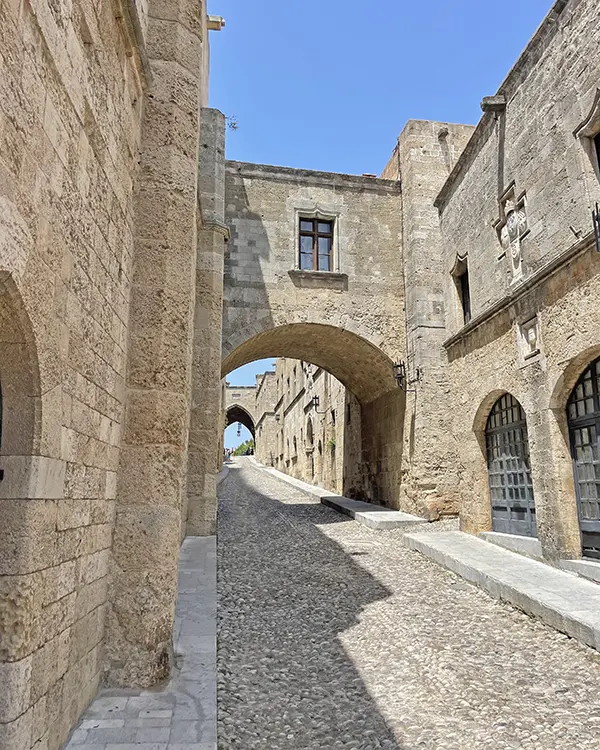
The Medieval City of Rhodes is one of the best-preserved medieval towns in Europe and a UNESCO World Heritage Site that feels like stepping through a portal into the age of the Crusaders. Behind its massive double ring of fortified walls, narrow cobblestone streets wind past Gothic archways, Byzantine churches, Ottoman mosques, and stone-built inns that once housed knights from across Europe. The atmosphere is at its most magical in the early morning or at dusk, when the crowds thin and the golden stone seems to glow. This extraordinary old town is the crown jewel among all the places to visit in Rhodes.
Visit the Palace of the Grand Master
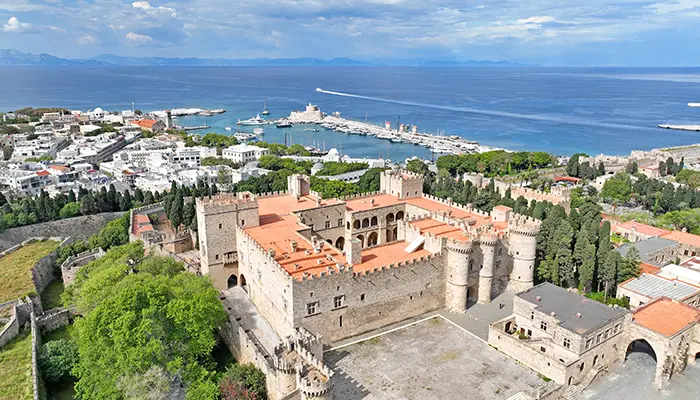
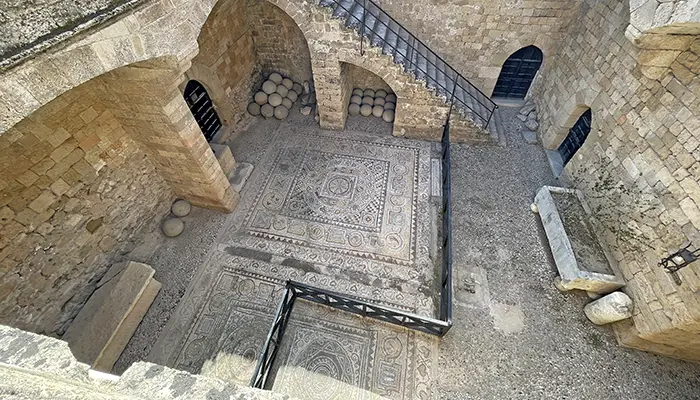
The Palace of the Grand Master stands at the highest point of the medieval city, a towering fortress-palace originally built in the 7th century and rebuilt by the Knights of St. John in the 14th century as their administrative headquarters. Its imposing twin towers guard the entrance to a vast interior of mosaic-floored halls, vaulted chambers, and courtyards that now house two permanent exhibitions on ancient and medieval Rhodes. The palace's sheer scale and craftsmanship make it one of the most impressive medieval monuments in the entire eastern Mediterranean. Visitors who appreciate the legacy of the Knights will also enjoy exploring Nerantzia Castle on Kos, another Dodecanese stronghold built by the same order.
Discover the Archaeological Museum of Rhodes
Housed in the beautifully restored 15th-century Hospital of the Knights on the Street of the Knights, the Archaeological Museum of Rhodes is as remarkable for its setting as for its collection. Inside, galleries display Hellenistic sculptures, funerary stelae, pottery, and jewelry spanning from the Mycenaean era through the Roman period. The star exhibit is the exquisite marble Aphrodite of Rhodes, a 1st-century BC sculpture that captures the grace and beauty for which Rhodian art was famous across the ancient world. See our Rhodes Island Guide for tips on combining museum visits with a walking tour of the old town.
Explore the Acropolis of Rhodes
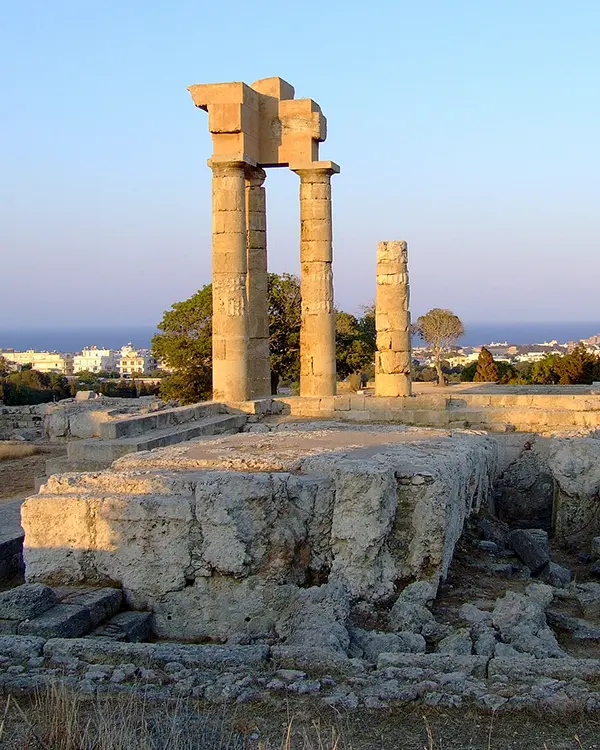
Perched on the hill of Monte Smith overlooking Rhodes Town and the sea beyond, the Acropolis of Rhodes reveals the classical Greek city that flourished here long before the Knights arrived. The partially restored Temple of Pythian Apollo, a small reconstructed stadium, and the remains of an ancient theater paint a vivid picture of the island's role as a major center of Hellenistic culture and learning. The site is open-air and free to visit, and the sunset views from the temple columns toward the Turkish coast are among the finest on the island. Archaeology enthusiasts exploring the Dodecanese will find another compelling ancient site at the Asklepion on Kos, the sacred healing center of Hippocrates.
Swim at Anthony Quinn Bay
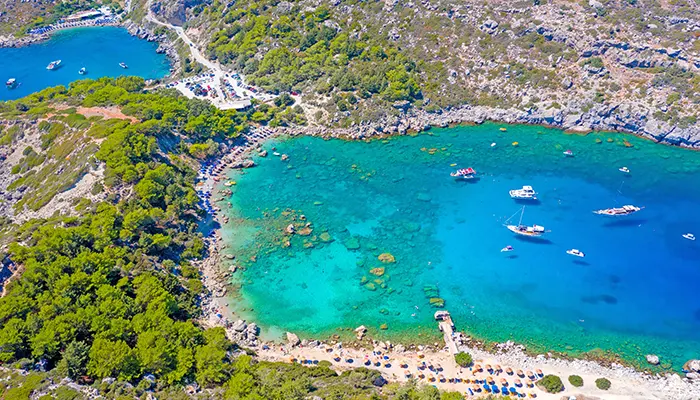
Named after the famous actor who fell in love with Rhodes during the filming of The Guns of Navarone, Anthony Quinn Bay is a small sheltered cove of emerald-green water framed by dramatic rocky cliffs and pine trees. The crystal clarity of the water and the vivid underwater landscape make it one of the best snorkeling spots on the island. Arriving early in the morning is the secret to enjoying this popular bay at its most peaceful, before the day-trip boats arrive. For more hidden coastal gems around the island, explore our full list of places to visit in Rhodes.
Traditional House of Koskinou
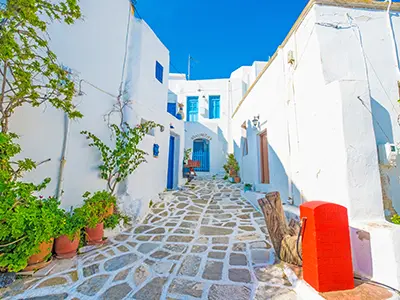
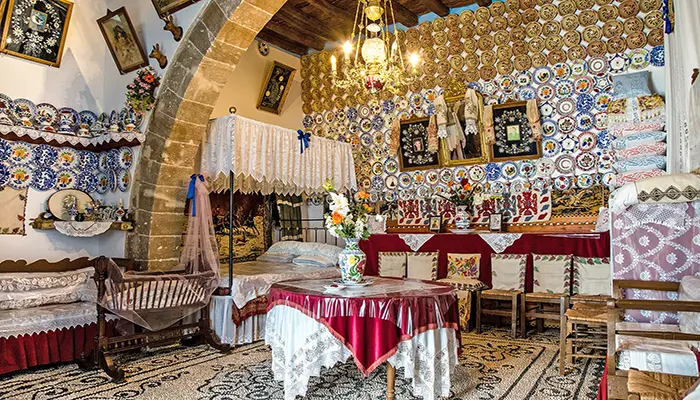
The inland village of Koskinou, just a short drive from Rhodes Town, is famous for its beautifully decorated traditional houses with brightly painted doorways, ornate ceramic plates adorning exterior walls, and pebble-mosaic courtyards known as hochlakia. Visiting a restored traditional house here offers a charming window into the domestic life and folk artistry that flourished on Rhodes for centuries. The village's quiet lanes and welcoming kafeneia make it a perfect half-day escape from the busier coastal resorts. Lovers of traditional villages will also be drawn to the atmospheric stone settlements of Lesvos, another Aegean island rich in folk heritage.
Join Us For a Better Vacation
Meander Feribot connects you to Rhodes with daily ferry crossings from Marmaris, making it easy to reach this legendary island from Turkey's stunning Aegean coast. Whether you are planning a day trip to the old town or a longer stay to explore Lindos and the southern beaches, our team is here to help you find the perfect crossing. Compare Marmaris Rhodes ferry tickets and secure the best fare for your journey.
Have questions before you travel? Browse our FAQs about Rhodes for practical tips on travel documents, luggage, and island transport, or explore all of our ferry routes to the Greek islands to plan a multi-island Aegean adventure. Your Rhodes experience is just one short sea crossing away.
Visit The Acropolis of Lindos
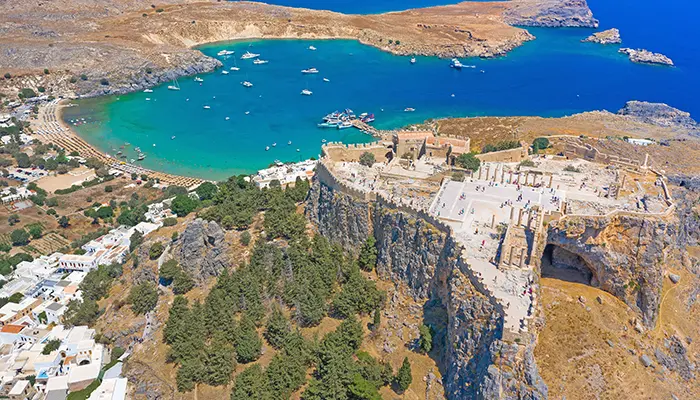
The Acropolis of Lindos is one of the most breathtaking archaeological sites in Greece, a fortified hilltop sanctuary where ancient Greek temples, a Hellenistic stoa, and a medieval castle built by the Knights of St. John stand together against a backdrop of endless blue sky and sea. The climb to the summit — on foot or by donkey — is rewarded with panoramic views of the whitewashed village below, the turquoise St. Paul's Bay, and the coastline stretching south toward distant islands. At the top, the graceful columns of the Temple of Athena Lindia have presided over this sacred site since the 4th century BC. Learn how to get to Rhodes and make Lindos the centerpiece of your island itinerary.
Saint Nicholas Fortress
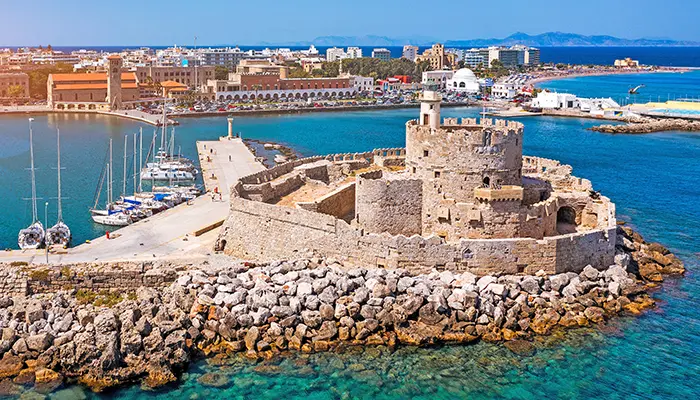
Standing on the tip of the harbor mole at Mandraki Port, the cylindrical Saint Nicholas Fortress was built in the 15th century by the Knights of St. John to defend the harbor entrance against Ottoman naval attacks. Its thick stone walls and strategic position made it a crucial element of the island's defenses, and today it serves as a striking landmark and lighthouse at the very spot where the Colossus of Rhodes is believed to have once stood. The fortress, the neighboring windmills, and the bronze deer statues flanking the harbor mouth together form one of the most iconic waterfront scenes in the Greek islands. Those fascinated by Crusader fortifications can continue their journey to Kastellorizo, where another castle of the Knights crowns the harbor.
Visit The Panagia tou Kastrou
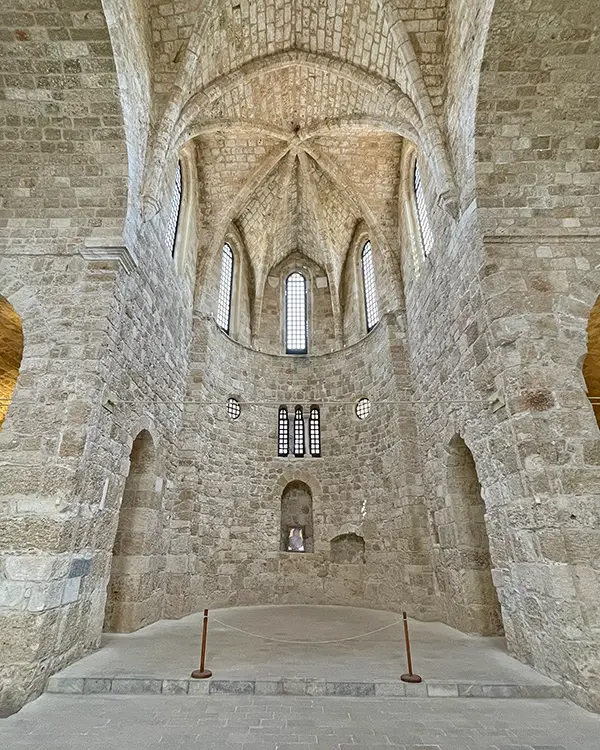
Tucked within the walls of the medieval city, Panagia tou Kastrou — the Church of Our Lady of the Castle — is a striking 11th-century Byzantine church that served as the Latin cathedral during the era of the Knights and later became a mosque under Ottoman rule. Its layered history is visible in every corner, from Byzantine frescoes partially surviving beneath whitewash to Gothic architectural additions and an Ottoman mihrab niche. Today the church houses the Byzantine Museum of Rhodes, where icons and religious art from across the Dodecanese are beautifully displayed. Visitors drawn to Byzantine sacred art will find a powerful complement in the golden mosaics of Nea Moni Monastery on Chios, a UNESCO World Heritage treasure.
Visit The Church of Annunciation
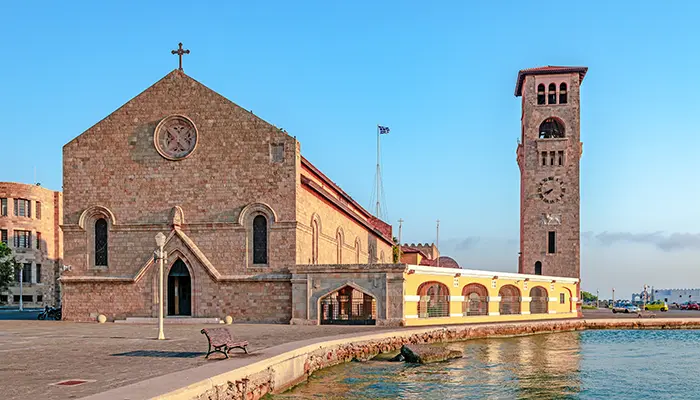
The Church of the Annunciation, known locally as Evangelismos, stands prominently at Mandraki Harbor and is one of the finest examples of Italian-era architecture on Rhodes. Built in the 1920s during the Italian administration, this grand church features stunning interior frescoes by the painter Fotis Kontoglou that rank among the most important examples of 20th-century Byzantine-revival religious art in Greece. Its ornate bell tower and the elegant arched facade make it a landmark visible from across the harbor, and stepping inside reveals a luminous sanctuary of color and devotion. Those interested in the spiritual heritage of the Aegean may also wish to visit Patmos, the island where St. John wrote the Book of Revelation.
Explore Panagia tou Bourgou
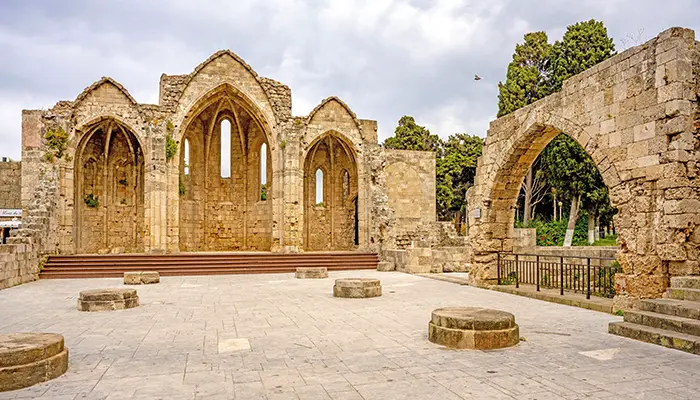
The ruined Gothic church of Panagia tou Bourgou rises hauntingly from the heart of the medieval city's Bourgo quarter, its roofless nave open to the sky and its elegant pointed arches still standing after centuries. Built in the 14th century by the Knights of St. John, this once-magnificent church was damaged by Ottoman bombardment and never fully restored, giving it an atmospheric quality that is both melancholic and deeply beautiful. Today the ruins serve as an evocative open-air venue for summer concerts and cultural events, adding a magical dimension to Rhodes's vibrant arts scene. Discover more architectural treasures across the island with our guide to places to visit in Rhodes.
Explore Lindos Town
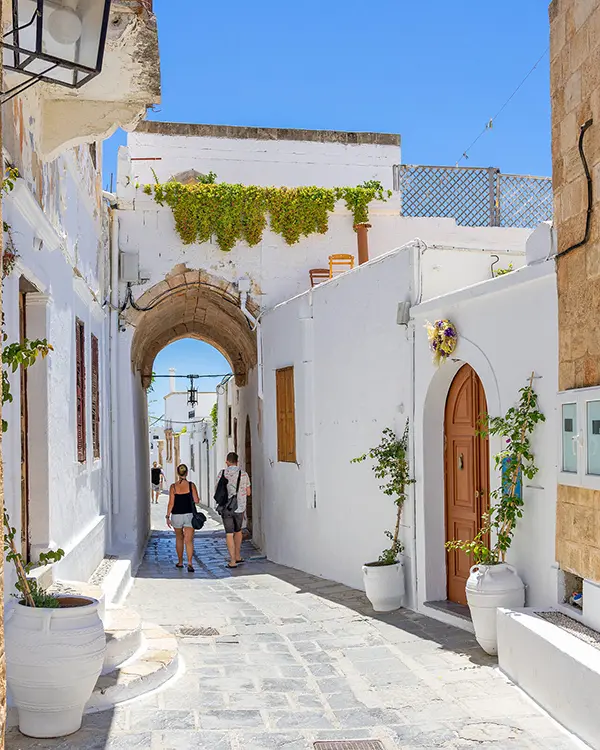
Nestled at the foot of the acropolis, Lindos is a picture-perfect village of whitewashed cube-shaped houses cascading down a hillside toward a stunning coastline. Its narrow car-free lanes are lined with boutiques, rooftop restaurants, and the famous Lindos captains' houses — grand 17th-century mansions with elaborately carved stone doorways and pebble-mosaic courtyards. The village spills down toward St. Paul's Bay, a near-circular cove of calm turquoise water said to be where the Apostle Paul first set foot on Rhodes. Travelers who love charming hilltop settlements will also enjoy the windmill-crowned ridge of Chora on Patmos or the cascading stone village of Molyvos on Lesvos.
Taste The Melekouni
No visit to Rhodes is complete without tasting melekouni, the island's beloved traditional sweet that has been prepared here since Byzantine times. This golden energy bar of sesame seeds and honey, perfumed with orange zest and spices, is traditionally served at weddings, baptisms, and celebrations as a symbol of fertility and good fortune. Crunchy, fragrant, and deeply satisfying, melekouni is available in bakeries and sweet shops across the island and makes the perfect edible souvenir to bring the taste of Rhodes home with you. Browse our Marmaris Rhodes ferry companies to choose the operator that best suits your schedule and start planning your island journey.