Lesvos Island Menu
LESVOS
Island of the Poets - Ayvalik & Aliaga routes
Chios Island Menu
CHIOS
Island of Mastiha - Cesme routes
Samos Island Menu
SAMOS
Island of Pythagoras - Kusadasi routes
Kos Island Menu
KOS
Island of Hippocrates - Bodrum & Turgutreis routes
Rhodes Island Menu
RHODES
Island of Colossus - Marmaris routes
Kastellorizo Island Menu
KASTELLORIZO
Island of Blue Grotto - Kas routes
Patmos Island Menu
PATMOS
Island of St John - Kusadasi routes
FAQs about Patmos — everything you need to know before visiting Patmos island from Turkey.

FAQs About Patmos

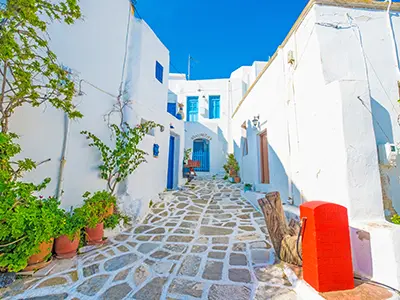
Whitewashed Greek island street — ferry tickets to the Greek islands from Turkey's Aegean coast.
DESTINATION
GREEK ISLANDS
We provide ferry tickets to the Greek islands from Turkey's Aegean coast. Explore our routes and find your perfect crossing.
We provide ferry tickets for all the Greek islands. Please do not hesitate to contact us for the most suitable ferry connections for your travel.
FERRY HIGHLIGHTS
DEPARTURE
KUSADASI
ARRIVAL
PATMOS
DEPARTS
ON CHARTER
TOUR & HOTEL
ON REQUEST
TRIP DURATION
APPROX 3 HRS

FAQs ABOUT PATMOS

THE ISLAND of ST. JOHN

Patmos is one of the most spiritually significant islands in the Christian world — the place where Saint John received the visions recorded in the Book of Revelation.

Whether you are travelling as part of a religious pilgrimage group, a guided tour, or an independent traveller curious about sacred Aegean history, these frequently asked questions cover everything you need to know about reaching Patmos by charter ferry from Kusadasi, exploring the island, and making the most of your visit.

Got questions? We've got answers!

Patmos Island

Patmos is unlike any other Greek island. Declared a UNESCO World Heritage Site, it holds profound religious significance as the place where Saint John the Apostle wrote the Book of Revelation around 95 AD.

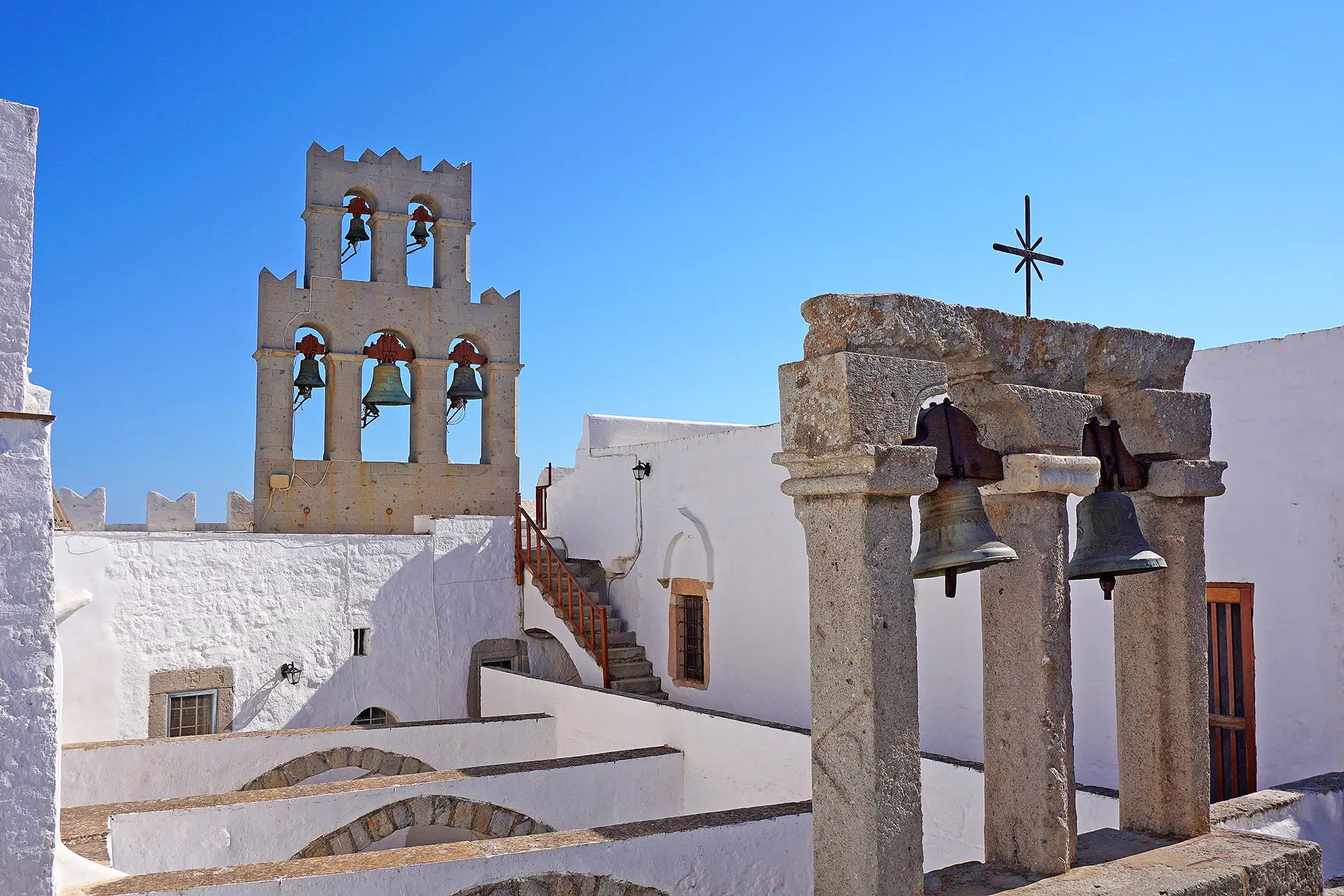
The island is home to the Cave of the Apocalypse — where John received his visions — and the magnificent fortified Monastery of Saint John the Theologian, which has stood on the hilltop since 1088.

Alongside its spiritual heritage, Patmos offers whitewashed Cycladic-style architecture, crystal-clear coves, and an atmosphere of rare tranquillity.

Patmos is open to all visitors.

While it is one of the most important pilgrimage destinations in Christianity and attracts devout travellers from around the world, the island also welcomes anyone drawn to its beautiful scenery, traditional village life, excellent cuisine, and serene beaches.

The presence of the monastery and sacred sites simply adds a unique depth to every visit.

Greek is the official language of Patmos. English is widely spoken in hotels, restaurants, shops, and at the main tourist sites, particularly during the summer season.

Staff at the monastery and cave typically provide information in multiple languages, including English.

Patmos uses the Euro (€), as it is part of Greece and the European Union.

Credit and debit cards are accepted at most establishments in Skala and Chora, but it is advisable to carry some cash for smaller tavernas, chapels, and local markets, particularly in quieter parts of the island.

The island is most accessible and atmospheric from April through October. Spring (April-May) and early autumn (September-October) offer pleasant temperatures, fewer crowds, and a more contemplative atmosphere ideal for pilgrimage visits.

July and August are the busiest and hottest months. The Feast of Saint John the Theologian on 26 September draws large numbers of pilgrims each year and is a deeply moving experience.

Patmos is a Greek island and part of the Schengen Area, so the same entry rules apply as for any Greek destination. Citizens of most countries can enter Greece with a valid passport.

EU citizens may travel with their national ID card. We recommend checking current entry requirements with the relevant embassy or consulate before your trip.

There are a small number of ATMs in Skala, the main port town, and these are generally reliable during the tourist season. However, Patmos is a small island and banking infrastructure is limited.

We strongly recommend withdrawing sufficient euros before you arrive, either in Kusadasi or at a larger airport or city en route. Do not rely on finding a working ATM at short notice, particularly during busy periods when machines can run dry.

Patmos is a peaceful and relatively unhurried island, which makes it well suited to older travellers.

The main challenge is the terrain — the routes to the Cave of the Apocalypse and Chora involve steps and uneven cobblestones, and the summer heat can be intense between midday and mid-afternoon.

Elderly visitors are advised to travel in the cooler morning hours, wear comfortable footwear, stay well hydrated, and discuss any mobility requirements with their group leader before the trip. The port area of Skala is largely flat and easily navigated.

Patmos is covered by Greek mobile networks and EU roaming rules apply for European citizens, meaning no additional roaming charges within the EU.

Visitors from Turkey and other non-EU countries should check roaming costs with their provider before travelling, as charges can be significant. Wi-Fi is available at most hotels and many cafés and restaurants in Skala and Chora.

Patmos has a small health centre in Skala that handles routine medical needs and emergencies. For serious medical situations, patients are typically transferred to the larger hospital on Kos or Rhodes by ferry or air evacuation.

We recommend that all travellers, and particularly elderly pilgrims, have comprehensive travel insurance that includes medical coverage and repatriation. A pharmacy is also available in Skala for everyday medications and supplies.

Kusadasi Patmos Ferry Charter Services

Because there is no regular scheduled ferry service between Kusadasi and Patmos, Meander Feribot operates dedicated charter crossings for groups.

This means we reserve an entire vessel specifically for your group, departing from Kusadasi at a time agreed in advance.

The crossing takes approximately three hours across the Aegean, with the boat arriving directly at Skala, the main port of Patmos.

Our Kusadasi-Patmos charters are designed for organised groups, typically religious congregations, pilgrimage tour operators, or travel agencies.

Minimum group sizes and vessel options depend on availability and season. Please contact us directly to discuss your group's requirements and we will propose the most suitable charter arrangement.

Yes. We work directly with churches, religious organisations, pilgrimage tour operators, and travel agencies to arrange private charter crossings.

We can also assist with coordinating the wider logistics of the visit, including connecting you with guided tours of the Cave of the Apocalypse and the Monastery of Saint John.

We recommend booking as early as possible, particularly for peak season sailings between May and October and around significant religious dates such as the Feast of Saint John (26 September) and Easter.

Groups that plan well in advance have a much wider choice of departure dates and vessel options.

All passengers must carry a valid passport. EU citizens may travel with their national identity card.

Please ensure all group members have their travel documents prepared and ready at check-in. We recommend arriving at Kusadasi port at least 60 minutes before the scheduled departure.

Our charter vessels are equipped with covered seating areas, toilet facilities, and outdoor deck space.

The Aegean can be lively in the afternoon, so we typically schedule morning departures when the sea conditions are calmest.

Passengers who are prone to motion sickness may wish to take appropriate precautions.

Yes, same-day return charters are available for day-trip groups.

Your group arrives in Skala in the morning, spends the day visiting the Cave of the Apocalypse, the Monastery, and the village of Chora, and returns to Kusadasi in the late afternoon or early evening.

For groups wishing to stay overnight, we can arrange return crossings on subsequent days.

Charter bookings are confirmed upon receipt of a deposit, with the remaining balance due prior to the sailing date. The exact deposit amount and payment schedule depend on the size and nature of the charter.

We accept bank transfer and can provide an official invoice for organisations and tour operators. Please contact us to receive a full quotation and the specific payment terms for your group.

Cancellation terms vary depending on how far in advance the cancellation is made and the size of the charter.

As a general principle, cancellations made well in advance of the departure date are subject to a lower cancellation fee, while late cancellations closer to the sailing date may result in partial or full forfeiture of the deposit.

Full cancellation terms are provided at the time of booking and will be clearly stated in your charter agreement.

Passenger safety is our absolute priority. If sea conditions are deemed unsafe for the crossing on the scheduled departure day, we will notify your group leader as early as possible and work with you to arrange an alternative date.

In the event of a weather cancellation that cannot be rescheduled, our cancellation terms for force majeure circumstances apply, and these are outlined clearly in the charter agreement.

The Aegean can experience strong winds, particularly in winter months, so we always recommend building some flexibility into your travel itinerary.

Patmos Island Tour

We can connect your group with experienced local guides on Patmos who specialise in religious and historical tours of the island.

A typical guided tour covers the Cave of the Apocalypse, the UNESCO-listed Monastery of Saint John the Theologian, and the medieval village of Chora, all with expert commentary on the biblical and historical significance of each site.

A thorough visit to both the Cave of the Apocalypse and the Monastery of Saint John typically takes between two and a half to three hours, including travel time between the sites by local bus.

Allowing additional time for Chora and Skala, a full day tour is the most comfortable option.

Entry to the Cave of the Apocalypse is free, though a small donation to the site is customary.

The Monastery of Saint John the Theologian charges a modest entrance fee.

The Monastery Treasury, which houses an outstanding collection of Byzantine manuscripts, icons, and ecclesiastical artefacts, has a separate admission fee.

Opening hours are seasonal, so we recommend confirming times in advance.

Yes. The Monastery of Saint John the Theologian requires all visitors to dress modestly.

Men must wear long trousers and should avoid sleeveless tops. Women should have their shoulders and knees covered.

Wraps and coverings are sometimes available at the entrance, but it is best to come prepared. Modest dress is also expected at the Cave of the Apocalypse.

Groups wishing to conduct prayer services or commemorative worship at the Cave of the Apocalypse should contact the monastery authorities in advance.

The cave is an active Orthodox Christian holy site and advance coordination is required for organised religious observances. We can assist in making the initial enquiry on your behalf.

Beyond the two main sacred sites, a Patmos day tour can include a walk through the whitewashed alleyways of Chora, a visit to one of the island's small Byzantine chapels, lunch at a traditional taverna in Skala port, and time at one of the island's quieter beaches.

Psili Ammos in the south is a particularly beautiful hidden cove for those with extra time.

Patmos Hotels for Groups

Patmos has a selection of hotels and boutique guesthouses primarily concentrated in Skala and Chora. The island caters well to smaller groups and those seeking a quiet, contemplative atmosphere.

For larger congregations, early booking is essential as the island's total accommodation capacity is limited compared to larger Greek islands.

We recommend staying at least one night to fully experience the spiritual atmosphere of the island.

Accommodation on Patmos ranges from simple, clean guesthouses to elegant boutique hotels with sea views.

The island has deliberately avoided large-scale resort development, maintaining its serene and authentic character. Most hotels are family run and offer warm, personal service. Rooms are typically comfortable and well maintained.

Skala, the main port, is the most convenient base for groups arriving by ferry. It offers the widest choice of accommodation, restaurants, and services, and is within easy reach of both the Cave of the Apocalypse and Chora.

Staying in Chora itself offers a more atmospheric and secluded experience, though the roads are narrow and access for luggage requires planning.

Yes, we can provide the trusted accommodation arrangements for your religious groups. Please contact us and we will do our best to assit you.

Patmos has a good range of traditional Greek tavernas and restaurants, particularly in Skala and Chora.

Vegetarian, vegan, and fish-based options are widely available and Greek Orthodox fasting menus are well understood.

Groups with specific dietary needs are advised to inform their accommodation and tour operator in advance.

Highlights of Patmos Island

The Cave of the Apocalypse is the spiritual heart of Patmos and the most significant site for Christian pilgrims. It is here that Saint John the Apostle is believed to have received the divine visions recorded in the Book of Revelation.

A cleft in the cave wall is traditionally said to be where John rested his head, and a silver disc marks the spot where he placed his hand to rise. The cave is now incorporated into the Chapel of Saint Anne and the Monastery of the Apocalypse.

Founded in 1088 by the Blessed Christodoulos with an imperial charter from Byzantine Emperor Alexios I Komnenos, the Monastery of Saint John the Theologian crowns the hilltop of Chora in a fortified complex visible from across the island.

It is one of the most important Orthodox Christian monasteries in the world and has been continuously inhabited by monks for nearly a thousand years. Its treasury holds extraordinary collections of Byzantine manuscripts, rare icons, and sacred relics.

Patmos has several beautiful beaches. Psili Ammos in the south of the island is widely considered one of the finest — a secluded stretch of fine golden sand accessible only by boat or a walking path, surrounded by clear turquoise water.

Grikos and Lambi are also popular and more easily reached by road. For day-trip visitors, Skala's nearby beaches offer a quick and convenient swim.

Chora is the medieval hilltop capital of Patmos, a UNESCO-protected village of dazzling white cubic houses, cobbled alleyways, arched doorways, and magnificent sea views. It wraps around the monastery walls in a labyrinth of quiet lanes dotted with small chapels.

The atmosphere is deeply peaceful and largely unchanged from centuries past. An evening walk through Chora after the day-trip crowds have departed is one of the most memorable experiences on the island.

Patmos was inscribed as a UNESCO World Heritage Site in 1999. The designation covers the Cave of the Apocalypse, the Monastery of Saint John the Theologian, and the historic village of Chora.

UNESCO recognised the site for its outstanding universal value as a place of living religious tradition, extraordinary architectural heritage, and its association with one of the founding texts of Christianity.

Places to Visit in Patmos Island

Skala is the lively and welcoming gateway to Patmos. The harbour front is lined with tavernas, cafés, and small shops selling local produce, icons, and handcrafts.

The Church of Saint Nicholas at the waterfront is worth a visit, and the evening atmosphere around the port is relaxed and charming. Skala is also where most ferry arrivals, charter boats, and local buses operate from, making it the natural starting point for any visit.

Yes. The immediate area around Skala has a number of small Byzantine chapels, pleasant waterfront walks, and the nearby beach at Meloi, just a short distance from the port.

For those with limited mobility or time, the atmosphere of Skala itself — with its traditional architecture, Orthodox church, and harbour views — is a genuinely rewarding experience.

A local bus service runs regularly between Skala, the Cave of the Apocalypse, and Chora during the tourist season. Taxis are also available at the port. The bus journey takes approximately ten to fifteen minutes.

Alternatively, the traditional donkey path up to Chora can be walked in around forty-five minutes and offers beautiful views, though it is steep in places.

Patmos rewards exploration beyond the central pilgrimage trail. The Monastery of the Apocalypse's small museum displays religious manuscripts and artefacts.

The fortified mansion houses of Chora reflect the island's long seafaring heritage. The northern village of Kambos has a more relaxed, local feel with a small beach and tavernas.

The island's windmills above Chora offer panoramic views across the Aegean on clear days.

The main sites of Patmos, including the Cave of the Apocalypse and much of Chora, involve steep paths, uneven cobblestones, and steps. Skala port and the waterfront are largely flat and accessible.

Visitors with limited mobility should discuss access requirements with their tour guide or group leader in advance, and may wish to focus their visit on the port area and the lower sections of the approach to the cave.

Yes. Skala has several shops selling Orthodox icons, prayer ropes (komboskini), religious books, local honey, and other handcrafted items.

The monastery gift shop near the entrance offers higher-quality items including reproductions of icons from the monastery treasury.

For pilgrims, purchasing a small icon or blessed item from Patmos carries special significance given the island's profound sacred heritage.

Practical Information for Patmos Island

We recommend that all group members arrive at Kusadasi port at least 60 minutes before the scheduled departure time.

Charter crossings involve passport checks and boarding procedures for the whole group, and a single delayed passenger can hold up the entire vessel.

Your group leader will receive specific check-in instructions from us ahead of the sailing date. Punctuality is essential as charter ferries cannot delay departure indefinitely.

For the crossing, bring your passport, any required visas, and any personal medication you may need.

For the day on Patmos, we recommend comfortable walking shoes with good grip for the cobblestone paths and steps leading to the cave and monastery, a lightweight scarf or shawl to meet the dress code at sacred sites, sun protection including a hat and sunscreen, a refillable water bottle, and a small amount of Euros in cash for entrance fees, candles, souvenirs, and meals.

A light jacket is advisable for early morning sailings even in summer, as it can be cool on the open deck.

Basic refreshments are typically available on board depending on the vessel assigned to your charter.

We recommend that group members eat a light meal before boarding and bring any snacks or water they may need for the crossing, particularly for passengers who prefer not to eat on a moving vessel.

Groups with specific catering requirements for the crossing should discuss these with us at the time of booking.

On arrival at Skala port, all passengers pass through Greek border control. This is a standard Schengen entry procedure. Every passenger must present a valid passport, and non-EU citizens must present their valid Schengen visa.

Border officers may ask basic questions about the purpose and duration of your visit. The process is generally straightforward for organised pilgrimage groups.

Your group leader should have a full passenger list prepared and readily available to present to border authorities if requested.

For day-trip charters, we recommend travelling as light as possible and leaving large luggage at your hotel in Kusadasi. Most hotels are happy to store bags for the day.

There is no dedicated left-luggage facility at Skala port on Patmos, though some local businesses near the harbour may assist. For groups staying overnight on Patmos, luggage is simply taken to your accommodation on arrival.

Travel insurance is not a formal requirement for the crossing but we strongly recommend it for all passengers, and particularly for elderly pilgrims or those with pre-existing health conditions.

A good policy should cover medical treatment in Greece, emergency repatriation, trip cancellation, and lost or delayed baggage.

Greece has excellent emergency medical services but Patmos is a small island, and serious medical situations require transfer to a larger island. The peace of mind that comprehensive travel insurance provides is well worth the cost.

For organised pilgrimage groups, pre-booking transport between the port, the cave, and the monastery is advisable to avoid delays, particularly during the busier summer months when taxis fill up quickly.

A public health centre is located in Skala and is equipped to handle routine medical needs and emergencies. A pharmacy is also available in Skala for everyday medications.

For serious medical emergencies, patients are transferred to the hospital on Kos or Rhodes. Group leaders should carry a basic first aid kit and a list of any medical conditions or allergies among their group members.

We also recommend that all passengers carry any personal prescription medication in sufficient supply for the duration of the trip.

The pan-European emergency number 112 works throughout Greece including on Patmos and connects to police, ambulance, and fire services. The Greek tourist police can also be reached on 171 and are accustomed to assisting foreign visitors.

The Patmos health centre number should be obtained locally on arrival. Your group leader should also have the Meander Feribot contact number saved and accessible throughout the trip in case any issues arise with the return charter or scheduling.

Sacred Site Etiquette & Pilgrimage Customs

Both the Cave of the Apocalypse and the Monastery of Saint John the Theologian warmly welcome visitors of all Christian denominations as well as those of other faiths and none.

Patmos has received pilgrims from Catholic, Protestant, Evangelical, and Orthodox traditions for centuries.

The sites are places of active worship and living monastic community, and all visitors are asked to enter with a spirit of reverence and respect regardless of their personal faith background.

Orthodox liturgies are held regularly at the Cave of the Apocalypse and at the Monastery. Visitors are generally welcome to attend and observe services, and in some cases to participate in elements of worship.

Groups wishing to attend a specific liturgy, receive a blessing, or have a prayer service led at the cave should contact the monastery authorities well in advance of their visit.

We can assist with the initial enquiry. On major feast days, particularly the Feast of Saint John on 26 September, the atmosphere is deeply moving and the liturgies are open to all who attend with reverence.

Photography inside the Cave of the Apocalypse is generally not permitted, as it is an active chapel and place of prayer.

The exterior and surroundings may be photographed. Inside the Monastery of Saint John the Theologian, photography rules vary by area — the courtyard can typically be photographed but the interior of the church and the treasury are usually off limits to cameras.

Always follow the guidance of the monks and site staff, and if in doubt, ask before raising your camera. Approaching sacred spaces with a camera already drawn is considered disrespectful.

Modest dress is required at all religious sites on Patmos without exception.

Men should wear long trousers that cover the knee and avoid sleeveless or vest-style tops. Women should have their shoulders, upper arms, and knees fully covered; long skirts or trousers and a shawl or light jacket are ideal.

Headscarves for women are not required at the monastery but are a mark of respect and appreciated. Coverings are sometimes available to borrow at the entrance to both sites, but groups should come prepared rather than rely on this.

Arriving appropriately dressed also speeds up entry considerably for larger groups.

Enter quietly and without disruption. Avoid talking, using mobile phones, or moving around unnecessarily during a service. If seating is available, take a place calmly. If the space is full, wait respectfully near the entrance until there is a natural pause.

Orthodox liturgies often involve standing, incense, chanting, and the movement of clergy — none of this requires any participation from visitors, simply quiet, attentive presence. Leaving during a service should be done as discreetly as possible.

Yes, and for many pilgrims this is one of the most meaningful moments of the visit.

Candles are available to purchase at both sites, and lighting a candle as an act of prayer or remembrance is warmly welcomed and entirely appropriate for visitors of any Christian tradition.

The proceeds support the upkeep of the monastic community and sacred sites.

The Feast of Saint John the Theologian is the most important religious event in Patmos's calendar and draws pilgrims from across Greece and the wider Orthodox world.

A solemn all-night vigil liturgy is held on the eve of the feast, and a formal liturgy and procession take place on the day itself. The atmosphere is profoundly spiritual.

Groups attending on or around this date should book their charter and accommodation many months in advance as the island fills quickly. Dress modestly, arrive early for the liturgy, and be prepared for a longer and more intense experience than a standard day visit.

The monks of Patmos live a life of prayer and contemplation and should be treated with quiet respect. Do not approach monks to ask for photographs or engage them in casual conversation unless they initiate it.

If a monk addresses your group, respond with courtesy and brevity. It is customary to bow your head slightly when greeting a monk or receiving a blessing.

The monastic community of Patmos has maintained its traditions for nearly a thousand years and a spirit of humble reverence is the most appropriate way to enter their world.

Greeks are warm, hospitable, and generous hosts, and a few small gestures go a long way. Greet locals with a simple kalimera (good morning) or kalispera (good evening) — it is always appreciated.

Tipping in restaurants is customary but not obligatory; rounding up the bill or leaving a small amount is standard practice. Shops and some sites observe an afternoon rest period, typically between around 2pm and 5pm, so plan your itinerary accordingly.

Speaking quietly in public spaces near churches and chapels is simply good manners on an island where religious life is woven into everyday rhythms.